Single phase 15kW
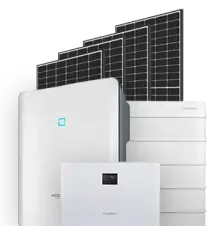
- Solar: 15 kW, 34 panels of about 441 W.
- Inverter: 10 kW hybrid that runs the panels and the battery.*
- Battery: 12.8 kWh.
- Yearly generation: about 20,750 kWh, capped at the inverter.

Solar packages
A 15kW solar system makes about 57 to 58 kWh a day in Melbourne on a north-facing roof (PVGIS model), the lower figure when a 10 kW single phase inverter caps it. We offer it as two of our solar and battery packages: single phase with 34 panels, a 10 kW hybrid inverter and a 12.8 kWh battery, and three phase with 36 panels and 16 kWh or more.
The federal rebates take about $6,700 off the single phase package if installed in May–December 2026, at $38 per STC, the top of the $33–$38 the Clean Energy Regulator says agents usually pay. We give you a fixed price after a free inspection.
Updated
Both pair 15 kW of solar panels with a home battery, installed. Your power supply decides which one fits.
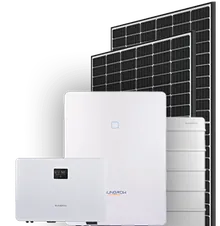
* Subject to the final design: the single phase package puts 150% of its inverter’s rating in panels, which the inverter maker has to allow, with the battery connected. The three phase inverter is sized in your design.
Your written quote names the panel, inverter and battery models and their warranties.
About twice as much in summer as in winter, on a north-facing roof in Mount Waverley, Melbourne. The single phase figures are capped at its 10 kW inverter; the three phase figures are before any inverter limit.
| Season | Single phase, a day | Three phase, a day | Lost to the cap |
|---|---|---|---|
| Summer (December to February) | About 74.8 kWh | About 78.2 kWh | 4.4% |
| Autumn (March to May) | About 50 kWh | About 50.5 kWh | 1% |
| Winter (June to August) | About 37.5 kWh | About 37.6 kWh | 0.1% |
| Spring (September to November) | About 65.4 kWh | About 67.4 kWh | 3% |
| Year | About 57 kWh (20,750 a year) | About 58 kWh (21,291 a year) | 2.5% |
The cap costs the single phase package about 541 kWh a year, mostly around midday in spring and summer, and a hybrid can send some of that surplus to its battery. East or west-facing roofs and shade make less; your design shows its own estimate.
Each of Victoria’s five electricity networks pre-approves up to 10 kW of inverter on a single phase home and 30 kW on a three phase home. That limit, not the number of panels, is what separates the two packages.
| For 15 kW of panels | Single phase | Three phase |
|---|---|---|
| Largest pre-approved inverter | 10 kW | 30 kW |
| Smallest inverter without a battery | 11,250 W: over the limit | 11,250 W: within the limit |
Under the SAA Technical Requirements (version 1.9, February 2026), a system without a battery needs an inverter whose output is at least 75% of the panels’ peak power. For 15,000 W of panels that is 11,250 W, more than the 10 kW pre-approved on a single phase home. With a battery connected, the panels may exceed that ratio, within the inverter maker’s maximum array size. So our single phase 15kW system is a solar and battery system by design.
Networks also cap how much solar a home sends to the grid, mostly per phase, so a three phase home can usually export more, and some networks plan to lower their fixed limits. On a summer day a 15kW system makes far more than most homes use, and what the home can’t use, store or export is lost: the inverter holds the panels back. Export limits by network
On single phase, a 10 kW hybrid with the battery connected, whose maker allows at least 15 kW of panels. On three phase, at least 11,250 W without a battery, and an inverter as big as the array will hardly ever cap its output.
| Inverter | Supply | Panels it takes |
|---|---|---|
| Sungrow SH-RS hybrid inverter | Single phase | Up to 12 kWp (SH5.0RS) and 13 kWp (SH6.0RS); up to 200% on SH8.0RS and SH10RS |
| Sungrow SH-T three phase hybrid inverter | Three phase | Up to 200% on SH15T to SH25T (30 to 50 kWp) |
| Fronius Primo GEN24 and Symo GEN24 hybrid inverter | Single phase (Primo GEN24) or three phase (Symo GEN24) | Up to 150% (a 5 kW model takes 7.5 kWp, a 10 kW model 15 kWp) |
| Alpha ESS SMILE-G3-S5 hybrid inverter | Single phase | Up to 10 kWp (200%) |
Your quote names the inverter in your package and confirms that its maker allows 15 kW of panels on it.
The single phase package has a 12.8 kWh battery and the three phase package 16 kWh or more. A 15kW system has the solar to fill either: on an average winter day it makes about 37.5 kWh, about 3 times the 12.8 kWh battery, where a 6.6kW system makes about 16.5 kWh. Your daytime use comes first.
The federal Cheaper Home Batteries Program pays STCs on usable capacity: the full rate on the first 14 kWh and 60% from 14 to 28 kWh, at a rate per kWh that next falls on 1 January 2027 and then every six months until the end of 2030.
| Battery | Installed May–December 2026 | Installed after the next drop |
|---|---|---|
| 12.8 kWh (Single phase) | 87 STCs, about $3,300 | 72 STCs, about $2,700 (January–June 2027) |
| 16 kWh (Three phase) | 103 STCs, about $3,900 | 86 STCs, about $3,300 (January–June 2027) |
Your quote names the battery brand and model. To earn the rebate it must be a new battery on the Clean Energy Council approved battery list, and installed by a Solar Accreditation Australia (SAA) accredited installer with battery endorsement.
A 15kW solar system with a battery is quoted installed, with the federal rebates taken off. Compare quotes like for like: panels, inverter, battery, mounting, switchboard work, network approval and rebate paperwork.
The price depends on your roof, your switchboard, your power supply and the battery you choose, so we give it to you fixed, in writing, after a free inspection, with every federal rebate your home qualifies for already taken off.
| Package | Solar STCs | Battery STCs | Federal rebates, about |
|---|---|---|---|
| 15kW solar + 12.8kWh battery Single phase | 88 | 87 | $6,700 |
| 15kW solar + 16kWh+ battery Three phase | 88 | 103 | $7,300 |
The solar STCs fall to 71 for a system installed from 1 January 2027, as the scheme’s deeming period shortens. The battery STCs drop from 1 January 2027.
Market data, not our price: the Solar Choice Price Index lists Melbourne systems only up to 10 kW, so there is no 15 kW figure. For a battery alone, the Solar Choice Battery Price Index averaged $7,784 for 10 kWh and $14,972 for 20 kWh across Australia in August 2026, after the rebate, with a hybrid inverter already in place. Don’t add the two indexes together: a package is priced from its design.
Compare what it makes with what you use: divide the kWh on your power bill by the days in the billing period. The Essential Services Commission’s Victorian Default Offer 2026–27 Price Determination uses 4,000 kWh a year, about 11 kWh a day, as the reference amount for a home. A 15kW system makes about 5 times that, so it suits homes that use much more, or plan to:
| Package | Panels | Inverter | Battery | Solar a day |
|---|---|---|---|---|
| 6.6kW package | 16 | 5 kW hybrid | 12.8 kWh | About 26 kWh |
| 15kW, single phase | 34 | 10 kW hybrid | 12.8 kWh | About 57 kWh |
| 15kW, three phase | 36 | Sized in the design | 16 kWh or more | About 58 kWh |
If your use is closer to the reference home, or your roof is small, a 10kW system or our 6.6kW package may suit you better. The solar calculator compares sizes with your own daily use.
Our single phase 15kW package uses 34 panels of about 441 W, and the three phase package 36 panels of about 417 W. With panels of about 2.0 to 2.1 m² each, that is roughly 68 to 76 m² of panels on the roof, before the gaps between rows and the clearances from the roof edges.
In Melbourne, about 57 kWh a day averaged over the year on a north-facing roof, with every hour capped at a 10 kW inverter, or about 58 kWh without the cap. Summer days average about 74.8 kWh and winter days about 37.5 kWh. East or west-facing roofs and shade make less. Output by season
Yes, with a battery. Victoria’s networks pre-approve up to 10 kW of inverter on a single phase home, and without a battery the SAA rules need at least 11,250 W of inverter for 15 kW of panels. With a battery connected the panels can go past that ratio, within the inverter maker’s limit, which is how our single phase package works. Your network’s single phase export limit still applies. Single vs three phase
Without a battery, the inverter must put out at least 75% of the panels’ peak power: 11,250 W for 15 kW. On three phase that is easy, because the networks pre-approve up to 30 kW. On single phase the pre-approved limit is 10 kW, so a 15kW system uses a 10 kW hybrid with the battery connected, and the inverter’s datasheet has to allow 15 kW of panels. Inverters for 15kW
It depends on your roof, your switchboard, your power supply and the battery. The federal rebates take about $6,700 off our single phase 15kW package and $7,300 off the three phase package if installed in May–December 2026, at $38 per STC, the top of the $33–$38 the Clean Energy Regulator says agents usually pay. We give you a fixed price in writing after a free inspection. Get a fixed price
Three things about your Melbourne home decide whether 15kW fits. The roof: 34 to 36 panels cover about 68 to 76 m², so the sunny faces need that much clear space. The supply: every network that serves Melbourne pre-approves 10 kW of inverter on single phase and 30 kW on three phase, which is why our single phase package needs its battery and a three phase home has more room. And the postcode, which matters more at this size: installed in 2026, 15 kW earns 88 solar STCs in zone 4, which covers most of Melbourne, and 103 in zone 3, which takes in some northern and western suburbs: up to about $600 more at $38/STC. Our Mount Waverley team reads your meter, measures your roof and confirms your postcode’s zone at a free inspection.
Free inspection, no obligation. Every federal rebate your home qualifies for comes off before you see the price.

Locally owned, locally installed. Call, email, or send the form and we’ll come out and inspect the property.