
Solar panels
Best solar panels for Melbourne homes (2026): how the main brands compare
The best solar panels for a Melbourne roof fit the most watts on it, keep their power through summer heat and carry long warranties from a maker with someone in Australia to claim against. A kilowatt of any of them makes about 1,419 kWh a year facing north in Melbourne (PVGIS), so the differences are watts per square metre, heat loss and the guarantees.
We compare eleven ranges from ten brands on each maker’s own datasheet: 22.53% to 25% efficiency, and product warranties of 20 to 30 years. Which brands we fit is being confirmed, and your quote names the exact model. Compare the panels side by side.
Updated
Solar panels compared side by side
The table puts the panel ranges on our list beside much-searched brands that aren’t on it, so you can compare solar panels on the figures each maker publishes and guarantees. Every figure comes from the maker’s own datasheet or warranty, in its Australian version where one is published: it is a comparison of documents, not a hands-on review. The rows are in alphabetical order, not a ranking.
What the columns mean
- Efficiency. The share of sunlight a panel turns into electricity. It decides how many watts fit on your roof: the most efficient panels ranked.
- Cells. The cell technology. Every range here uses N-type cells. The types section below explains the differences.
- Product warranty. Covers faults in the panel itself.
- Performance warranty. How long the maker guarantees the power, and the share of rated power it promises at the end.
- Yearly loss. The most power the maker says the panel will lose in its first year and each year after: the guaranteed degradation.
- Our previous list. Whether our previous site listed the brand. Which brands we fit today is being confirmed.
| Panel | Power | Efficiency | Cells | Product warranty | Performance warranty | Yearly loss | Our previous list |
|---|---|---|---|---|---|---|---|
| AIKO Neostar 3P54 AIKO-A475 to A500-MCE54Mw Source: AIKO Neostar 3P54 datasheet (AU market) | 475 to 500 W | Up to 25% | N-type back contact | 25 years | 30 years, at least 88.85% at the end | 1% in year 1, then 0.35% a year | Not listed |
| Canadian Solar TOPHiKu6 CS6.2-48TD (black frame) Source: Canadian Solar TOPHiKu6 CS6.2-48TD datasheet (AU) Source: Canadian Solar Australian warranty statement | 445 to 475 W | Up to 23.8% | N-type TOPCon, monocrystalline | 25 years (Australian warranty statement) | 30 years, at least 87.4% at the end | 1% in year 1, then 0.4% a year | Listed |
| JA Solar | Not shown: we couldn’t confirm JA Solar’s current Australian range on its own site. | Listed | |||||
| Jinko Solar 48QL6-DV dual glass JKM450-480N-48QL6-DV Source: Jinko Solar JKM450-480N-48QL6-DV datasheet (Jinko Solar Australia) | 450 to 480 W | Up to 24.02% | N-type TOPCon, monocrystalline | 25 years | 30 years, at least 88.85% at the end | 1% in year 1, then 0.35% a year | Not listed |
| LONGi Hi-MO X10 Scientist LR8-48HVH-470M to 485M Source: LONGi Hi-MO X10 LR8-48HVH datasheet (Australia and New Zealand) Source: LONGi Hi-MO X10 limited warranty (Australia) | 470 to 485 W | Up to 24.27% | N-type back contact (HPBC 2.0) | 25 years (Australian warranty) | 30 years, at least 88.85% at the end | 1% in year 1, then 0.35% a year | Not listed |
| Phono Solar Helios PS435M8GFH-18/VSH, PS440M8GFH-18/VSH Source: Phono Solar Helios datasheet | 435 to 440 W | Up to 22.53% | Heterojunction (HJT), N-type monocrystalline, bifacial | 30 years for homes (25 for commercial systems) | 30 years, at least 88% at the end | 1% in year 1, then 0.375% a year | Listed |
| Phono Solar Quasar PS475L7GFH-18/VBH Source: Phono Solar Quasar 475W datasheet | 475 W | Up to 23.27% | N-type back contact, monocrystalline | 30 years for homes (25 for commercial systems) | 30 years, at least 88.5% at the end | 1% in year 1, then 0.35% a year | Listed |
| REC Alpha Pure-RX REC450AA–REC470AA Pure-RX Source: REC Alpha Pure-RX product page Source: REC Alpha Pure-RX datasheet Source: REC Alpha Pure-RX flyer for Australia and New Zealand | 450 to 470 W | Up to 22.6% | Heterojunction (HJT), N-type monocrystalline | 20 years, or 25 years under REC ProTrust when an REC Certified Solar Professional installs and registers them | 25 years, at least 92% at the end | 2% in year 1, then 0.25% a year | Listed |
| SunPower Max HSM-BE54-HD490 to HD505 Source: SunPower Max datasheet (TCL SunPower, Australia and New Zealand) Source: TCL SunPower warranty for PV modules (Australia, October 2026) | 490 to 505 W | Up to 24.7% | N-type back contact, glass-glass | 30 years (Australian warranty) | 30 years, at least 88.85% at the end | 1% in year 1, then 0.35% a year | Not listed |
| Tindo Solar Walara G4P Walara-440G4P Source: Tindo Walara-440G4P datasheet | 440 W | Up to 22.6% | N-type TOPCon | 25 years | 25 years, at least 87.4% at the end | Not stated on the datasheet | Not listed |
| Trina Solar Vertex S+ TSM-490 to 510NEG10R.25Z Source: Trina Solar Vertex S+ NEG10R.25Z datasheet (AU) | 490 to 510 W | Up to 24.4% | N-type TOPCon (i-TOPCon), monocrystalline | Up to 25 years, under an Australian and New Zealand warranty supplement | 30 years, at least 88.85% at the end | 1% in year 1, then 0.35% a year | Not listed |
| Winaico NCX48 glass-glass WST-465NCX48-BW Source: WINAICO WST-465NCX48-BW datasheet (AUS) Source: WINAICO Australia product page | 465 W | Up to 23.3% | N-type TOPCon, monocrystalline, bifacial | 30 years | 30 years, at least 87.4% at the end | 1% in year 1, then 0.4% a year | Listed |
Left out when we checked in November 2026: Maxeon, because its own site says it now concentrates exclusively on the US market, its Australian page returns “not found”, and the SunPower brand’s Australian documents (TCL SunPower) list no Maxeon datasheet. Tindo Solar Walara G4P’s datasheet gives the power at the end of the warranty but no yearly figure.
A warranty only helps if the maker or its supplier has someone in Australia to claim against. For the brands on our list: Canadian Solar has an Australian office in Melbourne; REC has an Australian office in Melbourne; WINAICO has an Australian office in Sydney; Phono Solar sells through an Australian distributor. Market data, not our price: the Solar Choice Price Index puts typical panels at about $80 to $300 or more each (October 2026), depending on the brand and wattage. Panels are only part of a system’s price; see the solar panel cost guide.
The panel brands on our list
These are the panel brands our previous site listed and their current ranges in Australia, with specifications from each maker’s own datasheet, checked October 2026. Which we fit today is being confirmed; your quote names the exact model.
Canadian Solar panels
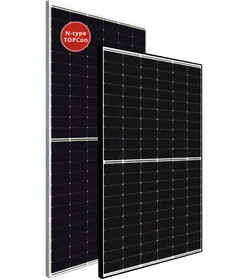
TOPHiKu6: N-type TOPCon panels with glass on both sides. Canadian Solar’s Australian warranty statement gives this black-frame range a 25-year product warranty and a 30-year performance warranty.
Canadian Solar has an Australian office in Melbourne. Datasheets: Canadian Solar TOPHiKu6 CS6.2-48TD datasheet (AU); Canadian Solar Australian warranty statement.
REC solar panels
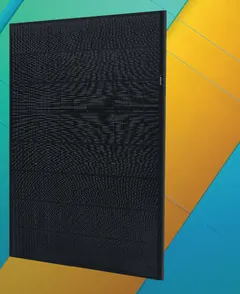
Alpha Pure-RX: A full-black heterojunction panel made in Singapore, with the lowest temperature coefficient here, so it loses the least power on hot days. REC guarantees at least 92% of its power in year 25.
REC has an Australian office in Melbourne. Datasheets: REC Alpha Pure-RX product page; REC Alpha Pure-RX datasheet; REC Alpha Pure-RX flyer for Australia and New Zealand.
Winaico solar panels
NCX48 glass-glass: A bifacial glass-glass panel from WINAICO’s Australian residential range, with a 30-year product warranty and a 30-year performance warranty.
WINAICO has an Australian office in Sydney. Datasheets: WINAICO WST-465NCX48-BW datasheet (AUS); WINAICO Australia product page.
Phono Solar (Sumec)
Helios: Bifacial heterojunction panels with glass on both sides, the Phono Solar range the previous Top End Solar site listed.
Quasar: Phono Solar’s newest panel in Australia (datasheet dated January 2026), with back-contact cells and dual glass.
Phono Solar sells through an Australian distributor. Datasheets: Phono Solar Helios datasheet; Phono Solar Quasar 475W datasheet.
JA Solar modules
JA Solar was in our previous panel range. We couldn’t confirm its current Australian range from JA Solar’s own site, so we don’t list specifications here; your quote confirms the current model.
Panels in our packages
Every package lists its panel count. Single phase: 6.6kW uses 16 panels, 15kW uses 34 panels, 19.8kW uses 45 panels. Three phase: 15kW uses 36 panels, 21kW uses 51 panels, 28kW uses 68 panels. Each package pairs the panels with a battery, so compare it with the batteries we install. Panels also need an inverter, and the inverters we install are compared on their own page.
Tier 1 and the approved list: what the labels mean
Tier 1 is about bankability, not quality
Tier 1 is a BloombergNEF list of panel manufacturers whose panels banks have financed in large solar projects. It measures how bankable the maker is, not how good a particular panel is, so check the panel’s own warranties as well. A “Tier 1” label tells you nothing about a particular panel’s efficiency, how much power it is guaranteed to lose or how long its warranties run. Those are in the table above, from each maker’s datasheet, and they matter more for the panels on your roof.
Checking a panel is on the approved list
The panels and the inverter must be on the Clean Energy Council’s list of approved products, which is another condition for STCs. Ask for the exact model numbers on the quote and check them. The Clean Energy Council approved PV modules list holds over 1,500 models tested to the international standard IEC 61215:2021, plus extra safety and consumer protection requirements. Models can be suspended or de-listed, so check the exact model number on your quote against the list before the panels go in.
The person who designs and installs the system must be accredited by Solar Accreditation Australia (SAA) and hold an unrestricted electrical licence in Victoria. Without that, the system cannot earn STCs, so the rebate on your quote depends on it.
Australian-made and all-black panels
Australian-made solar panels
If it matters to you, check where a panel is made: five of the six datasheets in our table from makers not on our list say so, and the LONGi datasheet doesn’t. Tindo Solar’s Walara-440G4P datasheet says “Manufactured in Australia by Tindo Operations Co Pty Ltd”. The AIKO, Jinko Solar, Trina Solar and SunPower datasheets say China. Where a panel is made doesn’t change how it is rated: compare an Australian-made panel on the same efficiency, power loss and warranty figures as any other. For a warranty claim, what matters is that the maker or its supplier has someone in Australia to deal with it.
All-black and black-frame panels
Black solar panels are a choice of look. A black-frame panel has a dark frame around a standard panel face; an all-black, or full black, panel is dark across its whole face as well. Full black in our table: REC Alpha Pure-RX and Trina Solar Vertex S+. Black frame: AIKO Neostar 3P54, Canadian Solar TOPHiKu6 and SunPower Max. The figures in the table belong to the exact model in each row, so compare a black panel on its own datasheet, and ask for the black version to be named on your quote.
Which cell technologies do these panels use?
The panels on our list are all monocrystalline, with cells cut from a single silicon crystal, and no datasheet in our table lists polycrystalline cells. They differ in cell technology: N-type TOPCon (Canadian Solar TOPHiKu6, Jinko Solar 48QL6-DV dual glass, Tindo Solar Walara G4P, Trina Solar Vertex S+ and Winaico NCX48 glass-glass), heterojunction or HJT (Phono Solar Helios and REC Alpha Pure-RX) and back contact (AIKO Neostar 3P54, LONGi Hi-MO X10 Scientist, Phono Solar Quasar and SunPower Max). Bifacial panels collect light on the back too: Winaico rates the back of its WST-465NCX48-BW at up to 80% of the front.
What one panel makes on a Melbourne roof
A kilowatt of solar panels makes about 1,419 kWh a year on a north-facing Melbourne roof, going by the PVGIS model for Mount Waverley, Melbourne (20° tilt, 14% system losses). So a 440 W panel makes about 625 kWh a year, around 1.7 kWh a day on average.
A more efficient panel makes more power per panel because it has a higher rating, not because each watt works harder. The panels on our list run from 22.53% to 23.8% efficiency and lose 0.24% to 0.29% of their power for each degree their cells run above 25°C, which counts on a hot Melbourne afternoon.
Size and weight of the panels on our list
The panels on our list are rated 435 to 475 W. They are about 1.72 to 1.8 m long and 1.13 to 1.21 m wide, around 2.0 to 2.1 m² each, and weigh 22 to 25 kg. Our 6.6kW package uses 16 panels, so the panels alone cover about 32 to 34 m² of roof, before the gaps between rows and the clearances from roof edges.
Guaranteed power over the years
Solar panels keep working for decades, losing a little power each year. The makers on our list guarantee 87.4% to 92% of the rated power at the end of a 25 to 30 year performance warranty, after a loss of 1% to 2% in the first year and 0.25% to 0.4% a year after that. The table above gives each panel’s terms. Regular servicing keeps the whole system safe and producing; see our solar servicing and repairs.
Comparing solar panels: your questions
Which solar panels are the best?
There is no single best panel. For a Melbourne roof, compare efficiency, the guaranteed yearly power loss and both warranties, and check the maker has someone in Australia to claim against. The eleven ranges we compare run from 22.53% to 25% efficiency, with product warranties of 20 to 30 years. We choose between the panels we fit for your roof, budget and the look you want, and your quote names the exact model. Compare the panels
Which solar panel brand has the longest warranty?
Of the panels we compare, Phono Solar Helios, Phono Solar Quasar, SunPower Max and Winaico NCX48 glass-glass carry the longest product warranty, 30 years. Performance warranties run 25 to 30 years: the 30-year ones guarantee 87.4% to 88.85% of rated power at the end, and the highest end figure is REC Alpha Pure-RX’s 92%, over a shorter 25-year term. Read the conditions too: some terms depend on who installs and registers the panels, or on the system being on a home. Warranties compared
What does Tier 1 mean for solar panels?
Tier 1 is a BloombergNEF list of panel manufacturers whose panels banks have financed in large solar projects. It measures how bankable the maker is, not how good a particular panel is, so check the panel’s own warranties as well. It doesn’t rate efficiency, power loss or warranty terms, which come from each panel’s own datasheet.
Are Australian-made solar panels better?
Not automatically: compare them on the same figures as any panel. Tindo Solar’s Walara G4P datasheet says “Manufactured in Australia by Tindo Operations Co Pty Ltd”. It is rated up to 22.6% efficient, with a 25-year product warranty and 87.4% of rated power guaranteed after 25 years. For a warranty claim, what counts is someone in Australia to make it to, which an imported panel with an Australian office or distributor also has.
What is the difference between black-frame and all-black solar panels?
A black-frame panel has a dark frame around a standard panel face. An all-black, or full black, panel is dark across its whole face as well, so the array reads as one dark surface on the roof. It is a choice of look. Compare a black panel on its own datasheet, because the efficiency and warranty belong to the exact model, and ask for the black version to be named on your quote. Black panels compared
How can I check a solar panel qualifies for the STC rebate?
The panel must be on the Clean Energy Council’s approved list, which holds over 1,500 models tested to IEC 61215:2021, and the system must be designed and installed by an SAA accredited installer. Models can be suspended or de-listed, so check the exact model number on your quote against the list before the panels go in. How the STC rebate works
Are premium solar panel brands worth the extra cost?
Sometimes. A premium brand earns its price through a longer warranty with someone in Australia to claim against, a smaller guaranteed yearly loss, less power lost in the heat or more watts per square metre, which matters most on a small or partly shaded roof. Market data, not our price: the Solar Choice Price Index puts typical panels at about $80 to $300 or more each (October 2026), depending on the brand and wattage. The panels are only part of a system’s price, so compare whole quotes. Standard vs premium prices
What the comparison means for a Melbourne home
For a Melbourne home, three things decide between the panels in the table. Efficiency, if the roof is small or split by vents and skylights. Heat: the Bureau of Meteorology’s Melbourne (Olympic Park) station averages 9.2 days a year at 35°C or more, and on those afternoons a panel with a low temperature coefficient keeps more of its power. And where you would claim: Canadian Solar, REC and TCL SunPower (the SunPower brand) all have their Australian offices in Melbourne, though each warranty says whether a claim goes to that office or to the seller.
The roof decides the rest: how many panels fit each face, the shade and which way it faces. Our Mount Waverley team inspects it and names the exact panel model on the quote, so you can check its datasheet against this table.
Get a quote with the exact panel model
Free inspection, no obligation. Every federal rebate your home qualifies for comes off before you see the price.

Talk to us about the right panels for your roof
Locally owned, locally installed. Call, email, or send the form and we’ll come out and inspect the property.
- Phone
- 0485 000 015
- Workshop
- 8/41 Ricketts Road,
Mount Waverley, VIC 3149