
Battery comparison
Best solar batteries for Melbourne homes in 2026: how they compare
There is no single best solar battery for a Melbourne home. The right one depends on the usable kWh you need after dark, the power it supplies at once, blackout backup, the warranty and where it can go. We compare nine home batteries sold in Australia on those points, from each maker’s own documents, checked 29 October 2026 to 5 November 2026.
To get the federal battery rebate, a battery must be on the Clean Energy Council’s approved list, and listings have end dates. Which brands we install is being confirmed; your quote names the exact model. New to home batteries? Start with solar batteries in Melbourne.
Updated
Home batteries compared
Each row links the documents its figures come from. Power is what the maker states: for batteries that plug into a hybrid inverter, your home gets at most that inverter’s rating. For what each backup set-up keeps running, see home battery backup.
| Battery | Usable capacity | Power | Chemistry | Warranty | Backup | Where it can go | Size and weight | Approved list |
|---|---|---|---|---|---|---|---|---|
| Alpha ESS SMILE-G3 Datasheet: Alpha ESS SMILE-G3-S5/B5 datasheet (AU), copy hosted by Plico Energy T5/T10: Alpha ESS SMILE-G3-T5/T10 datasheet (AU, 21 April 2026), copy hosted by SolarProof T15/T20: Alpha ESS SMILE-G3-T15/T20 datasheet (AU, 21 April 2026), copy hosted by SolarProof | 9.3 kWh per module (100% depth of discharge), up to 37.2 kWh on single phase, 55.8 kWh on three phase | 5 kW single phase (5 kVA backup port); 5 to 20 kW three phase | LFP | 10 years; 70% at 10 years | Backup (UPS) port for the circuits wired to it: 5 kVA single phase, 5 to 20 kVA three phase | Outdoor (IP65) | Each module 634 x 610 x 210 mm, 81 kg; S5 or B5 inverter 212 x 610 x 366 mm, 19.5 kg | Listed until 31 December 2027 (BAT-724) |
| BYD Battery-Box Premium HVS / HVM HVS datasheet: BYD Battery-Box Premium HVS datasheet HVM datasheet: BYD Battery-Box Premium HVM datasheet | HVS 5.12 to 12.8 kWh per tower; HVM 8.28 to 22.08 kWh per tower; up to three towers in parallel (38.4 kWh HVS, 66.24 kWh HVM) | Set by the paired inverter (BYD rates output current: 25 A HVS, 50 A HVM) | LFP | 10 years; 70% at 10 years or a throughput limit | Supports backup; depends on the paired inverter | Indoor or outdoor, floor stand (IP55) | Towers 585 mm wide, 298 deep: HVS 762 to 1461 mm high, 91 to 205 kg; HVM 995 to 2160 mm, 119 to 319 kg | HVS: listed until 17 January 2027 (BAT-489) HVM: listed until 5 December 2026 (BAT-451) The newer HVM+ (BAT-1039) is listed to 31 December 2027; the datasheets here cover HVS and HVM. |
| Enphase IQ Battery 5P with FlexPhase Product page: Enphase IQ Battery 5P with FlexPhase (Enphase Australia) Installer page: Enphase IQ Battery 5P with FlexPhase, installer page (Enphase Australia) | 5 kWh per unit; add more units | 1.65 to 3.84 kVA per unit, set at installation | LFP | 15 years or 6,000 cycles; 70% at 10 years | Grid-tied or backup set-ups; works with Enphase’s IQ System Controller | Wall or floor; listed for outdoor use (Enphase’s Australian pages give no IP rating) | Not stated on Enphase’s Australian pages | Listed until 31 December 2027 (BAT-646) |
| Fox ESS EQ5500 Datasheet: Fox ESS EQ5500 datasheet (AU) Inverter list: Fox ESS EQ5500 inverter compatibility list | 5.46 kWh modules; 10.92 to 49.14 kWh per stack | Battery rated 4.48 kW (2 modules) to 20.16 kW (9); the Fox ESS inverter sets the output | LFP | 10 years; 70% at 10 years or a throughput limit | Set by the Fox ESS hybrid inverter it is paired with | Indoor or outdoor, floor mount (IP65) | 386 x 570 x 380 mm, 85 kg (L2) to 1352 x 570 x 380 mm, 372 kg (L9) | Listed until 31 December 2027 (BAT-1030) |
| Fronius Reserva Product page: Fronius Reserva (Fronius Australia) Manual: Fronius Reserva operating instructions (July 2026) | 6.31, 9.47, 12.63 or 15.79 kWh (2 to 5 modules); up to four in parallel | Battery rated 5.94 kW (6.3) to 14.85 kW (15.8); the Fronius inverter sets the output | LFP | 10 years (Fronius); capacity terms in Fronius’s Australian conditions | Through a Fronius GEN24 Plus, as PV Point or, on models that list it, whole-home Full Backup (extra switchover parts needed) | IP65; indoors, or outside in a protected spot such as under an overhanging roof (Fronius’s manual rules out unprotected outdoor installation) | 860 x 780 x 176 mm, 86.6 kg (6.3) to 1610 x 780 x 176 mm, 187 kg (15.8) | Listed until 31 December 2027 (BAT-648) |
| GoodWe Lynx Home F G2 Datasheet: GoodWe Lynx F G2 datasheet (AU) Product page: GoodWe Lynx F G2 product page (GoodWe Australia) EHB inverter: GoodWe EHB single phase hybrid inverter (GoodWe Australia) | 3.2 kWh modules; 6.4 to 28.8 kWh per stack (at most 22.4 kWh on an EHB inverter, 19.2 kWh on an EH); up to 8 stacks in parallel | Battery rated 4.48 kW (2 modules) to 20.16 kW (9); the GoodWe inverter sets the output | LFP | 10 years; 70% at 10 years or a throughput limit | Set by the GoodWe inverter it is paired with | Floor standing; rated for outdoor installation (IP55) | 559 x 600 x 380 mm, 86 kg (LX F6.4) to 1651 x 600 x 380 mm, 324 kg (LX F28.8) | Listed until 31 December 2027 (BAT-1041) |
| Sigenergy SigenStor Datasheet: Sigen Battery 6.0 / 10.0 datasheet, copy hosted by SolarProof Brochure: SigenStor brochure for Australia, copy hosted by Superior Solar | 5.84 or 8.76 kWh modules; 1 to 6 per Energy Controller (up to 52.56 kWh) | Inverter 5 to 12 kW single phase, 5 to 30 kW three phase; each module 3 or 4.6 kW | LFP | 10 years; 70% at 10 years or a throughput limit | Whole or partial home, with the Sigen Energy Gateway | Floor or wall; listed for outdoor use (IP66) | Each module 270 x 767 x 265 mm; 62 kg (6.0) or 78 kg (10.0) | Listed until 31 December 2027 (BAT-987) |
| Sungrow SBR Datasheet: Sungrow SBR datasheet (AU) | 6.4 to 25.6 kWh per stack | Battery rated 3.84 kW (2 modules) to 15.36 kW (8); the Sungrow inverter sets the output | LFP | 10 years; 70% at 10 years | Through the Sungrow hybrid inverter; whole home on SH8.0RS, SH10RS and SH15T to SH25T | Indoor or outdoor, floor standing (IP55) | 545 x 625 x 330 mm, 89 kg (SBR064) to 1195 x 625 x 330 mm, 279 kg (SBR256) | Listed until 30 December 2026 (BAT-474) |
| Tesla Powerwall 3 Datasheet: Tesla Powerwall 3 datasheet (AU) 3AC datasheet: Tesla Powerwall 3AC datasheet (AU) | 13.5 kWh per unit; 54 kWh with three Expansions; up to seven units (94.5 kWh) in one system | 5, 10 or 11.04 kW per unit, by model (Powerwall 3AC: 5 kW) | LFP | 10 years; 70% at 10 years | Whole or partial home, with Backup Gateway 2 | Indoor or outdoor, floor or wall (IP67 battery, IP55 wiring) | Powerwall 3: 1105 x 609 x 193 mm, 130 kg; each Expansion 1105 x 609 x 168 mm, 110 kg | Powerwall 3: listed until 17 October 2027 (BAT-553) Powerwall 3 with Expansions: listed until 31 December 2027 (BAT-659) Powerwall 3AC: listed until 31 December 2027 (BAT-998) |
All nine use lithium iron phosphate (LFP) cells. Every one is listed for outdoor use on the Clean Energy Council list; the rating above is the maker’s own. Will it fit in your garage? Add the clearances in where a battery can be installed to the size above. Specifications change: your quote names the exact model and its datasheet.
Some documents are the maker’s own file, hosted by a distributor (named in brackets): the Alpha ESS SMILE-G3-S5/B5 datasheet (Plico Energy), the Alpha ESS SMILE-G3-T5/T10 datasheet (AU, 21 April 2026) (SolarProof), the Alpha ESS SMILE-G3-T15/T20 datasheet (AU, 21 April 2026) (SolarProof), the Sigen Battery 6.0 / 10.0 datasheet (SolarProof), the SigenStor brochure for Australia (Superior Solar), the GoodWe warranty (SolarProof), the Sigenergy warranty (Zelora) and the Sungrow warranty (SolarQuotes).
How we compared them
We started from the battery brands Australians search for most by name (our keyword research, August 2026) and kept models whose makers’ own documents give the figures and which are on the approved list. Where a maker doesn’t state a figure, the table says so. Growatt and SolaX aren’t in yet, and no maker paid to be included. The Fronius Reserva row is from Fronius Australia’s pages; with no Australian warranty terms to read, it stays out of the warranty comparison. Rows are alphabetical by brand. What each column means is under what to look for.
Sungrow vs Sigenergy
Both use LFP cells, carry a 10-year warranty that promises 70% of capacity at 10 years and work on single or three phase power. The main difference is the inverter. The Sungrow SBR is a battery only and connects to a Sungrow hybrid inverter. The Sigenergy SigenStor comes with its own inverter: battery modules sit on a Sigen Energy Controller, a hybrid inverter that also runs the panels.
| Spec | Sungrow SBR | Sigenergy SigenStor |
|---|---|---|
| Size steps | 3.2 kWh | 5.84 or 8.76 kWh |
| Usable, one stack | 6.4 kWh to 25.6 kWh | 5.84 kWh to 52.56 kWh |
| Backup | Through the Sungrow hybrid inverter; whole home on SH8.0RS, SH10RS and SH15T to SH25T | Whole or partial home, with the Sigen Energy Gateway |
| Phase | Single phase SH-RS or three phase SH-T hybrid inverter | Single phase (SP) or three phase (TP) Energy Controller |
| Warranty | 10 years, 70% at 10 years; no throughput limit for home use | 10-year product warranty; 70% at 10 years or about 3,046 full cycles (8.3 years at one a day), whichever comes first |
| Approved list | Listed until 30 December 2026 (BAT-474) | Listed until 31 December 2027 (BAT-987) |
The SBR suits a home that wants to grow in 3.2 kWh steps on a Sungrow hybrid inverter. SigenStor suits one that wants more than 25.6 kWh in one stack. Both can back up the whole home in a blackout: SigenStor through its gateway, the SBR only on some Sungrow inverters (see the Backup row). The SBR’s approved-list entry (BAT-474) runs to 30 December 2026, so check it is still listed on your install date.
Alpha ESS vs Fox ESS
Both use LFP cells, carry a 10-year warranty that promises 70% of capacity at 10 years and work on single or three phase power. The Alpha ESS SMILE-G3 comes with its own inverter: SMILE-G3-S5 is a hybrid that runs new panels; SMILE-G3-B5 is AC coupled for existing solar; SMILE-G3-T5 to T20 are three phase hybrids. The Fox ESS EQ5500 is a battery only and connects to a Fox ESS hybrid inverter. Alpha ESS’s Australian warranty document is older than its 9.3 kWh module and doesn’t name it, so ask for the current terms with your quote.
| Spec | Alpha ESS SMILE-G3 | Fox ESS EQ5500 |
|---|---|---|
| Size steps | 9.3 kWh | 5.46 kWh |
| Usable, one stack | 9.3 kWh to 55.8 kWh | 10.92 kWh to 49.14 kWh |
| Backup | Backup (UPS) port for the circuits wired to it: 5 kVA single phase, 5 to 20 kVA three phase | Set by the Fox ESS hybrid inverter it is paired with |
| Phase | Single phase S5 or B5, or three phase SMILE-G3-T5 to T20 hybrid inverter | Single phase H1-G2 or KH, three phase H3 Smart or H3 Pro inverter |
| Warranty | 10-year product warranty; 70% at 10 years or about 3,120 full cycles (8.5 years at one a day), whichever comes first | 10 years or about 4,219 full cycles (11.6 years at one a day), whichever comes first; 70% at 10 years |
| Approved list | Listed until 31 December 2027 (BAT-724) | Listed until 31 December 2027 (BAT-1030) |
The SMILE-G3 suits a home adding a battery beside the solar it already has (the B5), or one that wants battery and inverter sold as one system, on single or three phase. The EQ5500 suits one that wants a Fox ESS hybrid inverter on single or three phase. The Alpha ESS page covers each SMILE-G3 model.
Sungrow or Alpha ESS vs Tesla Powerwall 3
All three use LFP cells and carry a 10-year warranty that promises 70% of capacity at 10 years. Powerwall 3 is a 13.5 kWh unit with its own solar inverter, and Tesla’s Backup Gateway 2 gives whole or partial home backup. The SBR connects to a Sungrow hybrid inverter; the SMILE-G3 includes its own inverter. For a battery under 13.5 kWh, the SBR starts at 6.4 kWh and the SMILE-G3 starts at 9.3 kWh.
| Spec | Sungrow SBR | Alpha ESS SMILE-G3 | Tesla Powerwall 3 |
|---|---|---|---|
| Size steps | 3.2 kWh | 9.3 kWh | 13.5 kWh |
| Usable, one stack | 6.4 kWh to 25.6 kWh | 9.3 kWh to 55.8 kWh | 13.5 kWh to 54 kWh |
| Backup | Through the Sungrow hybrid inverter; whole home on SH8.0RS, SH10RS and SH15T to SH25T | Backup (UPS) port for the circuits wired to it: 5 kVA single phase, 5 to 20 kVA three phase | Whole or partial home, with Backup Gateway 2 |
| Phase | Single phase SH-RS or three phase SH-T hybrid inverter | Single phase S5 or B5, or three phase SMILE-G3-T5 to T20 hybrid inverter | Single phase unit; Backup Gateway 2 connects to single or three phase supply |
| Warranty | 10 years, 70% at 10 years; no throughput limit for home use | 10-year product warranty; 70% at 10 years or about 3,120 full cycles (8.5 years at one a day), whichever comes first | 10 years, 70% at 10 years; no throughput limit for home use |
| Approved list | Listed until 30 December 2026 (BAT-474) | Listed until 31 December 2027 (BAT-724) | Listed until 17 October 2027 (BAT-553, Powerwall 3) |
Powerwall 3 suits a home that wants one large battery with whole-home backup through Tesla’s gateway. The SBR or SMILE-G3 suits a smaller first battery, or capacity added in smaller steps (3.2 kWh or 9.3 kWh, against 13.5 kWh). Their backup set-ups differ most (the SBR backs up the whole home only on some Sungrow inverters), so decide first what has to keep running in a blackout.
Sungrow SBR and Alpha ESS SMILE-G3 in detail
Each has its own page: the sizes, the inverter it needs, its approved-list listing, the rebate by size, backup, warranty and monitoring, from the maker’s documents.
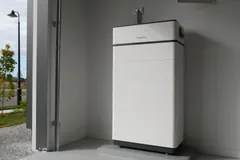
Sungrow SBR high-voltage battery
Stackable 3.2 kWh modules, so the battery is sized in small steps and can be extended later. It stands on the floor, so there is no heavy wall mounting.
6.4 to 25.6 kWh per stack; 10 years; 70% at 10 years.
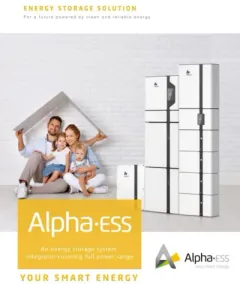
Alpha ESS SMILE-G3 home battery system
Battery and inverter designed as one system, with larger 9.3 kWh modules for homes that want more storage from fewer units.
9.3 kWh per module (100% depth of discharge), up to 37.2 kWh on single phase, 55.8 kWh on three phase; 10 years; 70% at 10 years.
Our previous website listed Sungrow and Alpha ESS batteries. The brands we install today are being confirmed, so this comparison doesn’t mark any of them as ours. After a free inspection, your quote names the exact model, its size and its warranty.
Which battery suits which home
These groups come straight from the table; a battery can be in several.
Choose the size before the brand
Size the battery to your evening use and the spare solar that charges it, not to the biggest that fits (our battery guide explains what size battery you need). Then compare brands that reach that size in sensible steps: from 2.56 or 2.76 kWh modules (BYD Battery-Box Premium HVS / HVM) to 13.5 kWh units (Tesla Powerwall 3) in this table.
A small evening load
If you use under about 10 kWh after dark, these start at 10 kWh or less in one system: Enphase IQ Battery 5P with FlexPhase (from 5 kWh), BYD Battery-Box Premium HVS / HVM (from 5.12 kWh), Sigenergy SigenStor (from 5.84 kWh), Fronius Reserva (from 6.31 kWh), GoodWe Lynx Home F G2 (from 6.4 kWh), Sungrow SBR (from 6.4 kWh) and Alpha ESS SMILE-G3 (from 9.3 kWh).
A big evening load or an EV
In one stack (the modules one battery controller or inverter runs), these reach 20 kWh or more: Alpha ESS SMILE-G3 (55.8 kWh: six modules on a three phase SMILE-G3-T5 to T20; at most 37.2 kWh (four) on the single phase S5 or B5), Tesla Powerwall 3 (54 kWh: one unit with three Expansions), Sigenergy SigenStor (52.56 kWh: six 10.0 modules on one Energy Controller), Fox ESS EQ5500 (49.14 kWh: nine modules in one stack), GoodWe Lynx Home F G2 (28.8 kWh: nine modules; at most 22.4 kWh on GoodWe’s single phase EHB inverter and 19.2 kWh on its EH), Sungrow SBR (25.6 kWh: eight modules in one stack) and BYD Battery-Box Premium HVS / HVM (22.08 kWh: one HVM 22.1 tower). Some makers also allow more than one stack or unit in a system:
- BYD Battery-Box Premium HVS / HVM: up to three towers in parallel (38.4 kWh with HVS, 66.24 kWh with HVM).
- Enphase IQ Battery 5P with FlexPhase: add more 5 kWh units (the Enphase Australian pages we read state no maximum).
- Fronius Reserva: up to four batteries in parallel, says Fronius Australia.
- GoodWe Lynx Home F G2: up to 8 stacks in parallel (230 kWh).
- Sigenergy SigenStor: several systems can run in parallel, with no figure given.
- Tesla Powerwall 3: up to four Powerwall 3 units and three Expansions, seven units and 94.5 kWh in all.
The rebate counts only the first 50 kWh of usable capacity, and the battery must be 5 to 100 kWh nominal in one job. Above 14 kWh it also pays less per kWh, so a bigger battery only pays if you use it.
Adding capacity later
Smaller modules let you grow in smaller steps. From the smallest step to the largest: BYD Battery-Box Premium HVS / HVM (2.56 or 2.76 kWh), GoodWe Lynx Home F G2 (3.2 kWh), Sungrow SBR (3.2 kWh), Enphase IQ Battery 5P with FlexPhase (5 kWh), Fox ESS EQ5500 (5.46 kWh), Sigenergy SigenStor (5.84 or 8.76 kWh), Alpha ESS SMILE-G3 (9.3 kWh) and Tesla Powerwall 3 (13.5 kWh). GoodWe’s warranty allows no added capacity after the first year. Capacity added later gets no rebate if the first battery claimed it.
Adding a battery to solar you already have
Alpha ESS SMILE-G3 (as the SMILE-G3-B5), Enphase IQ Battery 5P with FlexPhase, GoodWe Lynx Home F G2 (with a retrofit inverter) and Tesla Powerwall 3 (itself, or as the battery-only Powerwall 3AC) can sit beside your existing solar inverter (AC coupling). The others connect through a hybrid inverter: Sigenergy SigenStor includes one, and BYD Battery-Box Premium HVS / HVM, Fox ESS EQ5500, Fronius Reserva and Sungrow SBR need a compatible one from the maker’s range or list, which can replace your old inverter. We check which suits your system at the inspection.
Three phase homes
Alpha ESS SMILE-G3, BYD Battery-Box Premium HVS / HVM, Enphase IQ Battery 5P with FlexPhase, Fox ESS EQ5500, Fronius Reserva, GoodWe Lynx Home F G2, Sigenergy SigenStor and Sungrow SBR work on three phase through a three phase inverter or model. Tesla Powerwall 3: single phase unit; Backup Gateway 2 connects to single or three phase supply. Single or three phase? Here’s how to tell.
Solar battery reviews: what to look for
Most solar battery reviews mix the battery, the installer and the owner’s experience, which a star rating can’t tell apart, and makers sell different versions in different countries. This comparison covers the battery only, from documents you can check, with no star ratings. Check any review against the points below, and ask who wrote it: installers sell particular brands. Which brands we install is being confirmed, so the table marks none of them as ours. Backup and phase are under which battery suits which home.
Usable vs total capacity
Compare usable capacity, not total: some energy is held back to protect the cells. A Sigenergy 10.0 battery module holds 9.04 kWh in total and 8.76 kWh usable by its datasheet, while the approved list records 9 kWh. The federal rebate is paid on the listed figure, so that is the number to check.
Continuous vs peak power
Continuous power (kW) is what the battery system can supply for hours: add up the appliances you want running at the same time. Peak power is a short burst for starting motors such as an air conditioner or a pump. Sigenergy SigenStor modules can each supply 4.5 kW (6.0) or 6.9 kW (10.0) for 10 seconds. Tesla Powerwall 3 can start heavy loads rated up to 185 A locked rotor amps (LRA). A modular battery on a hybrid inverter can deliver no more than that inverter’s rating, so check both on your quote.
Warranty years, throughput and retained capacity
A battery warranty usually covers two things: defects, and how much capacity the battery keeps (the performance or capacity guarantee). Compare three numbers: the years, the capacity promised at the end, and any throughput limit (the total energy delivered) or cycle limit. For most makers that limit ends only the capacity guarantee; for some it ends the whole warranty. To compare limits, we divide each one by the battery’s usable capacity to get full charge and discharge cycles.
| Battery | Term | Capacity promised | Throughput or cycle limit | Full cycles the limit allows | Conditions |
|---|---|---|---|---|---|
| Alpha ESS SMILE-G3 Warranty: Alpha ESS Australia, Warranty Conditions for the Residential Product Series, 11 October 2024 | 10 years | 70% at 10 years | 3.12 MWh per kWh of usable capacity (ends the capacity guarantee; the 10-year product warranty runs on) | About 3,120 (8.5 years at one a day) | This October 2024 document covers the SMILE-G3-S5 and SMILE-G3-B5 systems but is older than the 9.3 kWh module and doesn’t name it, so ask for the current terms with your quote. Capacity guarantee: throughput under 3.12 MWh per kWh of usable capacity. Installed by an SAA accredited installer with an Alpha Installer ID; needs an internet connection. |
| BYD Battery-Box Premium HVS / HVM Warranty: BYD Battery-Box Premium HVS & HVM Limited Warranty (Australia), V1.1 | 10 years | 70% at 10 years | 38.53 MWh on 12.8 kWh (ends the capacity guarantee; the 10-year product warranty runs on) | About 3,010 (8.2 years at one a day) | Capacity guarantee: 70% of usable energy for 10 years from the sale date or the throughput limit (38.53 MWh for HVS 12.8), whichever comes first. Needs a compatible inverter and internet access to its data. |
| Enphase IQ Battery 5P with FlexPhase Warranty: Enphase Warranty, Storage Systems (Australia and New Zealand), effective 15 June 2025 | 15 years | 70% at 10 years; 60% at 15 years | 6,000 discharged cycles (ends the warranty) | 6,000 (16.4 years at one a day) | The warranty ends at 15 years or 6,000 discharged cycles, whichever comes first; 70% of nameplate at 10 years and 60% at 15 years. Should stay connected to the internet. |
| Fox ESS EQ5500 Warranty: Fox ESS AU Battery Warranty, version 2.7, 28 March 2026 | 10 years | 70% at 10 years | 46.07 MWh on 10.92 kWh (ends the warranty) | About 4,219 (11.6 years at one a day) | One performance warranty: 70% of energy for 10 years or the throughput limit (46.07 MWh for 10.92 kWh), whichever comes first; at most 125 months from manufacture. Must be registered and online at commissioning. |
| GoodWe Lynx Home F G2 Warranty: GoodWe Limited Warranty for Lynx LX F G2 (Australia and New Zealand), Rev 1.4, 1 November 2024, copy hosted by SolarProof | 10 years | 70% at 10 years | 46.72 MWh on 12.8 kWh (ends the capacity guarantee; the 10-year product warranty runs on) | About 3,650 (10 years at one a day) | Capacity guarantee: 70% of usable capacity for 10 years or the throughput limit (46.72 MWh for 12.8 kWh), whichever comes first. Needs an internet connection; no added capacity after the first year. |
| Sigenergy SigenStor Warranty: Sigenergy Factory Limited Warranty for SigenStor (Australia and New Zealand), 2025, copy hosted by Zelora | 10 years | 70% at 10 years | 26.68 MWh on 8.76 kWh (ends the capacity guarantee; the 10-year product warranty runs on) | About 3,046 (8.3 years at one a day) | Capacity guarantee: 70% of usable energy for 10 years or 17.79 MWh (6.0 module) / 26.68 MWh (10.0 module) of throughput, whichever comes first. Must stay online: over a year disconnected cuts the term to 5 years. |
| Sungrow SBR Warranty: Sungrow HV Battery Limited Warranty V8.0, effective 1 October 2024, copy hosted by SolarQuotes | 10 years | 70% at 10 years | None for daily self-consumption and backup; 35.84 MWh for other uses on an SBR128 | No limit for home use | Must be monitored in iSolarCloud. Ends at most 126 months after manufacture. |
| Tesla Powerwall 3 Warranty: Tesla Powerwall Warranty (Australia and New Zealand), Rev. 1.17, effective 3 September 2026 | 10 years | 70% at 10 years | None for solar self-consumption, time-of-use shifting and backup; 37.8 MWh for any other use | No limit for home use | If it isn’t registered, or stays offline for an extended period, Tesla says it may honour only 4 of the 10 years. Bought from Tesla or a Tesla certified installer. |
Most of these warranties need the battery online, so the maker can update it and see its data. Ask your installer to register it with the maker. A manufacturer warranty is separate from the installer’s workmanship warranty, which your quote should state.
All use lithium iron phosphate (LFP) cells, so the warranty terms are the clearest guide to how each maker expects its cells to age.
LFP, NMC and sodium-ion compared
Where a battery can go
The rating in the table is the maker’s; AS/NZS 5139:2019, the Australian installation standard, also says never inside a habitable room or in a ceiling space or wall cavity. A garage, carport or outside wall is usual.
The federal rebate on these batteries
The Cheaper Home Batteries Program pays the same whatever the brand: the rebate depends only on the battery’s usable capacity and the date it is installed. It pays the full rate on the first 14 kWh, 60% from 14 to 28 kWh and 15% from 28 to 50 kWh. Installs in May–December 2026 use a factor of 6.8; from 1 January 2027 it falls to 5.7. The table shows each battery’s smallest system and a large one, and all four Fronius Reserva sizes.
| Battery and size | Usable capacity listed | Installed May–December 2026 | Installed January–June 2027 |
|---|---|---|---|
| Alpha ESS SMILE-G3, one module | 9.3 kWh | 63 STCs, about $2,400 | 53 STCs, about $2,000 |
| Alpha ESS SMILE-G3, four modules | 37.2 kWh | 161 STCs, about $6,100 | 135 STCs, about $5,100 |
| Alpha ESS SMILE-G3, six modules (three phase) | 55.8 kWh | 174 STCs, about $6,600 | 146 STCs, about $5,500 |
| BYD Battery-Box Premium HVS / HVM, HVS 5.1 | 5.12 kWh | 34 STCs, about $1,300 | 29 STCs, about $1,100 |
| BYD Battery-Box Premium HVS / HVM, HVM 22.1 | 22.08 kWh | 128 STCs, about $4,900 | 107 STCs, about $4,100 |
| Enphase IQ Battery 5P with FlexPhase, one unit | 5 kWh | 34 STCs, about $1,300 | 28 STCs, about $1,100 |
| Enphase IQ Battery 5P with FlexPhase, three units | 15 kWh | 99 STCs, about $3,800 | 83 STCs, about $3,200 |
| Fox ESS EQ5500, EQ5500-L2 | 10.92 kWh | 74 STCs, about $2,800 | 62 STCs, about $2,400 |
| Fox ESS EQ5500, EQ5500-L9 | 49.14 kWh | 173 STCs, about $6,600 | 145 STCs, about $5,500 |
| Fronius Reserva, 6.3 | 6.31 kWh | 42 STCs, about $1,600 | 35 STCs, about $1,300 |
| Fronius Reserva, 9.5 | 9.47 kWh | 64 STCs, about $2,400 | 53 STCs, about $2,000 |
| Fronius Reserva, 12.6 | 12.63 kWh | 85 STCs, about $3,200 | 71 STCs, about $2,700 |
| Fronius Reserva, 15.8 (Symo GEN24 Plus or Verto Plus) | 15.79 kWh | 102 STCs, about $3,900 | 85 STCs, about $3,200 |
| GoodWe Lynx Home F G2, LX F6.4 | 6.4 kWh | 43 STCs, about $1,600 | 36 STCs, about $1,400 |
| GoodWe Lynx Home F G2, LX F28.8 (not on an EH or EHB inverter) | 28.8 kWh | 153 STCs, about $5,800 | 128 STCs, about $4,900 |
| Sigenergy SigenStor, one 6.0 module | 6 kWh | 40 STCs, about $1,500 | 34 STCs, about $1,300 |
| Sigenergy SigenStor, six 10.0 modules | 54 kWh | 174 STCs, about $6,600 | 146 STCs, about $5,500 |
| Sungrow SBR, SBR064 | 6.4 kWh | 43 STCs, about $1,600 | 36 STCs, about $1,400 |
| Sungrow SBR, SBR256 | 25.6 kWh | 142 STCs, about $5,400 | 119 STCs, about $4,500 |
| Tesla Powerwall 3, one unit | 13.5 kWh | 91 STCs, about $3,500 | 76 STCs, about $2,900 |
| Tesla Powerwall 3, with three Expansions | 54 kWh | 174 STCs, about $6,600 | 146 STCs, about $5,500 |
Dollar figures use $38 per STC, the top of the range the CER says agents usually pay, for every period. The number of STCs is set by the program; their dollar value in later years depends on the STC price then.
To get the rebate, the battery must be:
- installed by a Solar Accreditation Australia (SAA) accredited installer with battery endorsement
- a new battery on the Clean Energy Council approved battery list
- able to join a virtual power plant (VPP) if it is connected to the grid
Joining a virtual power plant is optional. The Clean Energy Regulator’s battery rules have the current version.
Comparing batteries: your questions
How should I read solar battery reviews?
Look past the stars to what the review measures. A rating mixes the battery, the installer and the owner’s experience, so check that it gives the usable kWh, the continuous power, the backup type, the warranty’s years, the capacity it promises and any throughput limit and conditions, and whether the model is still on the approved list. Those figures come from the maker’s datasheet and warranty, which our comparison links for each battery. Then ask who wrote it: installers, us included, sell particular brands. What to look for
Which home battery has the longest warranty?
Of the eight batteries whose Australian warranties we compared, Enphase IQ Battery 5P with FlexPhase has the longest term: 15 years or 6,000 cycles, whichever comes first, with 70% of capacity promised at 10 years and 60% at 15 years. The others carry 10 years. Alpha ESS SMILE-G3, BYD Battery-Box Premium HVS / HVM, GoodWe Lynx Home F G2 and Sigenergy SigenStor also set a throughput limit: once the battery has delivered that much energy, the capacity guarantee ends, though the 10-year product warranty against defects runs on. Fox ESS EQ5500 has a single performance warranty, which its throughput limit can end early. Sungrow SBR and Tesla Powerwall 3 set no throughput limit for solar self-consumption and backup. Each maker promises 70% of capacity at 10 years. Warranty terms compared
Which batteries can back up the whole house in a blackout?
Sigenergy SigenStor and Tesla Powerwall 3 state whole-home or partial-home backup with their own gateway. Fronius Reserva: through a Fronius GEN24 Plus, as PV Point or, on models that list it, whole-home Full Backup (extra switchover parts needed). Sungrow SBR: through the Sungrow hybrid inverter; whole home on SH8.0RS, SH10RS and SH15T to SH25T. For Alpha ESS SMILE-G3, BYD Battery-Box Premium HVS / HVM, Enphase IQ Battery 5P with FlexPhase, Fox ESS EQ5500 and GoodWe Lynx Home F G2, what can run in a blackout depends on the system design: a backup port, a backup controller or the inverter it is paired with. Backup also needs extra wiring for the backed-up circuits, which we check at the inspection. How home battery backup works
Do all these batteries qualify for the federal battery rebate?
Each model in our tables was on the Clean Energy Council approved batteries list when we checked it (30 October 2026 to 5 November 2026), but listings have end dates. The first to end here: the BYD HVM listing runs to 5 December 2026 and the Sungrow SBR listing runs to 30 December 2026. So check the model is still listed when your battery goes in. It also has to be installed by a Solar Accreditation Australia (SAA) accredited installer with battery endorsement, and able to join a virtual power plant (VPP) if it is connected to the grid. There is one battery claim per property. How the battery rebate works
How much is the federal rebate on a Tesla Powerwall 3?
A Powerwall 3 is listed with 13.5 kWh usable, so one installed in May–December 2026 earns 91 STCs, about $3,500 at $38/STC; from 1 January 2027 it earns 76 STCs, about $2,900. Tesla gets no special rate: every brand is paid on listed usable capacity and install date, the same in Melbourne as anywhere in Australia. With three Expansions (54 kWh) only the first 50 kWh counts. The rebate on each battery
What does the Tesla Powerwall 3 warranty cover in Australia?
Tesla’s Australian warranty runs 10 years and promises 70% of the 13.5 kWh at 10 years. Cycles are unlimited for solar self-consumption, time-of-use shifting and backup; the limit is 37.8 MWh for any other use. If it isn’t registered, or stays offline for an extended period, Tesla says it may honour only 4 of the 10 years. GoodWe Lynx Home F G2 and Sigenergy SigenStor, like most batteries here, cap home use with a throughput limit instead. Warranty terms compared
Can I add modules from a different brand to my battery later?
Plan on staying with the same brand and range. Every battery here grows with its own maker’s modules or units, and the documents add limits: Powerwall 3 Expansions work only with Powerwall 3; Sungrow’s warranty accepts only new modules added to an existing stack; GoodWe’s allows no added capacity after the first year. Capacity added later can only claim the federal rebate if the first battery never claimed it, and the addition must be at least 5 kWh. So size the battery for your needs the first time.
Choosing a battery for a Melbourne home
Since 1 October 2026, Victoria’s Midday Power Saver has made grid power free from 11 am to 2 pm (up to 24 kWh a day), so a home on that plan can fill its battery from the grid too. In three hours, the charge rate on the datasheet, not only the Power column, limits how much it takes in. And a 6.6 kW north-facing system in Mount Waverley averages about 14.4 kWh a day in June (PVGIS), barely more than one Tesla Powerwall 3 holds (13.5 kWh), so the larger sizes here lean on those free hours in winter. We check your roof, switchboard and battery spot at a free inspection.
Get a quote with the exact battery model
Free inspection, no obligation. Every federal rebate your home qualifies for comes off before you see the price.

Talk to us about choosing a battery
Locally owned, locally installed. Call, email, or send the form and we’ll come out and inspect the property.
- Phone
- 0485 000 015
- Workshop
- 8/41 Ricketts Road,
Mount Waverley, VIC 3149