
Home batteries
Home battery backup: what keeps running in a Melbourne blackout
A backup battery for your home keeps the power on in a Melbourne blackout only when the system is built for backup; Sungrow’s hybrids switch over in under 10 ms. Solar Victoria says standard grid-connected solar, with or without a battery, switches off in an outage, while a hybrid inverter wired for backup runs your chosen circuits, or the whole home, from the solar battery.
What keeps running depends on the inverter’s backup rating, from 5 kW on a Sungrow SH5.0RS (5 kVA on Alpha ESS’s SMILE-G3) to 25 kW on a three phase SH25T, and on how much charge the battery has when the grid goes down.
Updated
Does a solar battery work in a blackout?
Only if it is set up for backup. Solar Victoria says standard solar systems, with or without a battery, are “designed to switch off during a power outage to protect homes from power surges and those potentially working on nearby electricity lines”. A hybrid (‘multimode’) inverter wired for backup changes that: it disconnects the house from the grid and keeps supplying the circuits on its backup output, sending nothing to the grid. Solar Victoria calls this ‘islanding’.
- Grid on: the backed-up circuits run as normal, from the panels, the battery and the grid.
- Grid fails: the inverter disconnects from the grid and switches the backed-up circuits to the battery, in under 10 ms on Sungrow’s hybrids.
- During the outage: the battery, and the panels in daylight, run those circuits; nothing is exported.
- Grid back: the inverter reconnects and the home returns to normal operation.
Because backup depends on the inverter and the system design, Solar Victoria advises telling your installer you want it. It also notes that outages are rare in Victoria but can reach any grid-connected home (Solar batteries: what you need to know about backup power; Power outages and all-electric homes).
Whole-home vs essential-circuits backup vs a backup outlet
Which set-up a home gets depends on the inverter and the switchboard wiring. Solar Victoria notes that some inverters run the home continuously in an outage while others back up only one or two priority circuits such as your fridge and lights.
| Set-up | What keeps running | What it needs | Examples |
|---|---|---|---|
| Whole home | Every circuit, as long as the total stays within the inverter’s backup rating | An inverter or gateway that carries the home’s whole supply, and switchboard work | Sungrow SH8.0RS, SH10RS, SH15T, SH20T and SH25T (built-in 63 A bypass); Tesla Powerwall 3 (whole or partial home, with Backup Gateway 2); Sigenergy SigenStor (whole or partial home, with the Sigen Energy Gateway) |
| Essential circuits | The circuits moved to the backup output; Solar Victoria says these are typically lights and your fridge | A backup output on the inverter, and those circuits rewired to it with safety switches | Alpha ESS SMILE-G3 backup port (5 kVA); Sungrow SH5.0RS and SH6.0RS backup port |
| Backup outlet (solar only) | One output, powered by the panels in daylight; no battery | An inverter with that feature | Fronius Primo GEN24 and Symo GEN24 (PV Point: up to 3 kVA from the panels during a blackout) |
Whole-home backup still runs on the inverter’s backup rating, 10 kW on a Sungrow SH10RS, so the loads on at once must stay under it, and the battery empties faster with the whole house on.
Switchover time and what will run
Switchover time
Sungrow states a backup switch time under 10 ms, a hundredth of a second, for its SH-RS and SH-T hybrids, and calls it a “seamless switch”. Alpha ESS lists the SMILE-G3’s backup as “UPS” (uninterruptible power supply) and states no switch time on its Australian datasheet.
What will run
The inverter’s backup rating caps how much can run at once (kW); the energy left in the battery caps how long (kWh). After dark, with no solar, the battery’s own power rating applies too.
| Inverter | Phase | Backup rating | Short peak | Switch time | Whole home |
|---|---|---|---|---|---|
| Sungrow SH5.0RS | Single | 5 kW | 8.4 kVA for 10 s | Under 10 ms | No: chosen circuits |
| Sungrow SH6.0RS | Single | 6 kW | 8.4 kVA for 10 s | Under 10 ms | No: chosen circuits |
| Sungrow SH8.0RS | Single | 8 kW | 13.68 kVA for 10 s | Under 10 ms | Yes (63 A bypass) |
| Sungrow SH10RS | Single | 10 kW | 13.68 kVA for 10 s | Under 10 ms | Yes (63 A bypass) |
| Sungrow SH15T | Three | 15 kW | 25.5 kVA for 10 s | Under 10 ms | Yes (63 A bypass) |
| Sungrow SH20T | Three | 20 kW | 32 kVA for 10 s | Under 10 ms | Yes (63 A bypass) |
| Sungrow SH25T | Three | 25 kW | 36.5 kVA for 10 s | Under 10 ms | Yes (63 A bypass) |
| Alpha ESS SMILE-G3-S5 / B5 | Single | 5 kVA | Not stated | Not stated (“UPS”) | No: chosen circuits |
An example, by our arithmetic: Sungrow rates the 12.8 kWh SBR128 battery at 7.68 kW. On a 10 kW SH10RS at night, the backed-up circuits get the smaller of the two, about 7.68 kW; in daylight the panels add to it. Sungrow notes that its three phase peak figures “can be reached only if PV and battery power is sufficient”.
If someone at home relies on powered medical equipment, Solar Victoria advises getting specialist advice on backup, because typically home battery systems are not appropriate to service the required power load as a primary source.
How Sungrow SBR and Alpha ESS SMILE handle backup (makers’ specs)
Sungrow’s SBR and Alpha ESS’s SMILE-G3 set out backup differently in their makers’ datasheets. Your written quote names the exact battery, inverter and backup set-up.
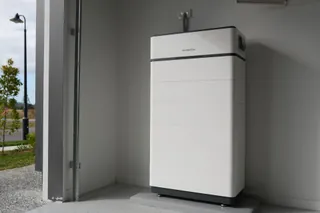
Sungrow SBR high-voltage battery
The SBR battery has no backup output of its own: backup comes from the Sungrow hybrid inverter it connects to. The single phase SH8.0RS and SH10RS and the three phase SH15T to SH25T have a built-in 63 A bypass for whole-home backup; the SH5.0RS and SH6.0RS back up the circuits on their backup port, at up to 5 or 6 kW. All switch over in under 10 ms.
Its power rating rises with the stack: 3.84 kW for 6.4 kWh, up to 15.36 kW for 25.6 kWh (SBR datasheet).
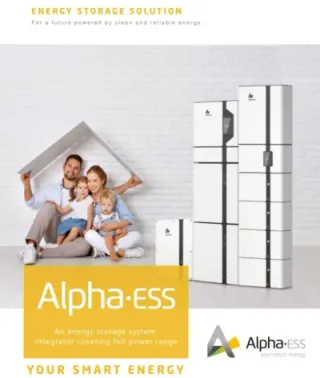
Alpha ESS SMILE-G3 home battery system
The SMILE-G3 is battery and inverter in one system. Its backup is a 5 kVA “UPS” backup port: the circuits wired to it keep running, up to 5 kVA in all; Alpha ESS doesn’t state whole-home backup. Both the S5 hybrid and the B5 for existing solar have the port.
It uses 9.3 kWh modules: 1 to 4 modules (9.3 to 37.2 kWh) on the single phase S5 or B5; up to 6 (55.8 kWh) on a three phase SMILE-G3-T5 to T20.
Of the other batteries in our comparison, Tesla Powerwall 3 and Sigenergy SigenStor state whole or partial-home backup through their own gateways.
Sizing for blackouts and the backup reserve
Backup storage is the load you keep on (kW) times the hours you want it: 1.5 kW for 10 hours is 15 kWh. Solar Victoria says how much backup power you get and how long it lasts depend on the size of your solar system, how much electricity you use during the outage and what the appliances you keep running draw.
- It may not be full. A blackout can start late at night, after the evening has used the battery.
- The backup reserve. Some systems keep part of the battery for outages. Sungrow says its iSolarCloud app sets “how much battery percentage should be kept as reserve” (Sungrow backup factsheet for its SH5.0–10RT three phase hybrid, Europe). A 20% reserve on a 12.8 kWh battery holds back about 2.56 kWh that your evenings don’t use.
- Winter refills less. Spare solar can recharge the battery during an outage on systems built for it, but winter leaves less to spare: PVGIS models a north-facing 6.6 kW system in Mount Waverley, Melbourne at about 14.4 kWh a day in June against 34.9 in January.
- Size it the first time. There is one battery claim per property, and modules added later don’t get the rebate if the first battery already claimed it.
Backup on three phase homes
On a three phase home, backup depends on whether the inverter is single or three phase. A single phase hybrid connects to one phase, so only circuits on that phase, or moved onto it, can be backed up, and anything that needs three phase power won’t run in a blackout. A three phase hybrid can back up all three phases.
Sungrow’s SH15T to SH25T have a 63 A bypass on each phase for whole-home backup, supply 15, 20 or 25 kW in backup, and support “100 % unbalance output in backup and on grid mode”, so the three phases don’t need equal loads. Among the batteries in our comparison, Sigenergy SigenStor, Sungrow SBR, Alpha ESS SMILE-G3, GoodWe Lynx Home F G2, Fox ESS EQ5500, BYD Battery-Box Premium HVS / HVM and Enphase IQ Battery 5P with FlexPhase have three phase set-ups; Tesla Powerwall 3 is a single phase unit.
Hybrid vs off-grid: why Melbourne homes stay connected
A hybrid solar system is grid-connected solar with a battery and, when wired for it, backup; the grid stays as the fallback. An off-grid (stand-alone) system has no grid connection at all: Solar Victoria describes it as solar panels, inverters, a battery bank and a backup petrol or diesel generator, the generator primarily used to support the system during cloudy winter periods (Solar Battery Buyers Guide, section 3).
That winter gap is why a Melbourne home with a grid connection usually keeps it: the June solar output above is about 41% of January’s, and the grid covers the shortfall without a generator. Stand-alone systems follow their own standard, AS/NZS 4509.1:2009 (Stand-alone power systems, Part 1: Safety and installation), which Energy Safe Victoria lists beside the battery standard AS/NZS 5139:2019, and Solar Victoria notes that some retailers and installers specialise in them. This guide covers backup on grid-connected homes.
What backup adds to an install
Backup is mostly switchboard work: the circuits you want kept on move to the inverter’s backup output, or the whole supply runs through the inverter’s bypass or the maker’s gateway. Energy Safe Victoria says every circuit supplied from a backup output needs RCD (safety switch) protection of the type the inverter maker specifies; with partial backup, only the backed-up circuits count. Type AC RCDs may not be installed in Australia since 1 May 2023 (Energy Safe Victoria).
- A backup output: on the hybrid inverter, or a separate gateway for batteries that use one.
- Switchboard work: moving the chosen circuits and fitting the right safety switches.
- A compliant spot for the battery: under AS/NZS 5139:2019, a battery can’t go in a ceiling space or wall cavity, or under a stairway or access walkway, or in an escape route, among other places.
- Look, don’t touch: all of it is work for a licensed electrician, inspected before switch-on.
Which inverter goes in each of our packages, and so whether its backup covers chosen circuits or the whole home, is confirmed on your quote. Tell us which circuits you want kept on in a blackout, and your quote says what its backup covers.
We don’t publish a price for backup on its own: it depends on the circuits, the switchboard and the inverter. We inspect the home and give you a fixed installed price with the federal rebate already taken off.
Battery backup: your questions
What is blackout protection on a solar battery?
It is a battery system’s ability to keep supplying your home when the grid goes down. With backup, a hybrid inverter disconnects the house from the grid and runs the backed-up circuits from the battery and, in daylight, the panels; Solar Victoria calls this ‘islanding’. It depends on the inverter and the wiring, not the battery alone, so ask for it by name in your quote. Whole home or essential circuits
Will solar recharge my battery during a blackout?
It can, on a system wired for backup. In daylight the panels run the backed-up circuits and any spare solar goes into the battery: Sungrow’s backup factsheet for its SH5.0–10RT three phase hybrid says the inverter will use excess PV energy to charge the battery during an outage. Winter leaves less to spare: PVGIS models a north-facing 6.6 kW system in Melbourne at about 14.4 kWh a day in June, against 34.9 in January. Sizing for blackouts
How long will a home battery run my house in a blackout?
Divide the energy left in the battery by what the backed-up circuits draw: a full 12.8 kWh battery running 1.5 kW lasts about 8.5 hours. It is rarely full when an outage starts, and in daylight the panels can stretch it. Essential-circuit backup lasts longer than whole-home backup from the same battery, because less is running. Size a battery for backup
Can I add blackout backup to a battery I already have?
Often, depending on the inverter. If your hybrid inverter or battery has an unused backup output, an electrician can move your chosen circuits onto it; if it has none, backup needs a different inverter or a gateway. Solar Victoria notes that backup set-ups are done by the installer and may involve additional charges, so start with an inspection. What backup adds to an install
Does a VPP battery still give me backup in a blackout?
It can, but don’t assume it. Solar Victoria says batteries built for virtual power plants may have the functionality to operate during a grid outage but are ‘not customised for this purpose’. The federal rebate needs a battery that is able to join a virtual power plant (VPP) if it is connected to the grid, but joining one is optional, and backup comes from the inverter and the wiring either way. Who qualifies for the battery rebate
Planning backup for a Melbourne winter blackout
Plan Melbourne backup around a winter outage, not a summer one. In June the 6.6 kW north-facing system PVGIS models in Mount Waverley, Melbourne makes about 14.4 kWh a day, 41% of January’s 34.9, and a blackout that starts after dark begins with whatever the evening has left in the battery. So size the backup reserve and the backed-up circuits for a long winter night: a battery running only essential circuits, typically lights and your fridge, lasts longer than one running the whole house.
At a free inspection our Mount Waverley team checks whether your home is single or three phase, looks at the switchboard and works out which circuits can go on the backup output, so the quote says what stays on.
Get a battery quote with backup
Tell us which circuits you want kept on in a blackout. We inspect the home and give you a fixed installed price that says what the system backs up.

Talk to us about blackout backup
Locally owned, locally installed. Call, email, or send the form and we’ll come out and inspect the property.
- Phone
- 0485 000 015
- Workshop
- 8/41 Ricketts Road,
Mount Waverley, VIC 3149