
Our entry package
6.6kW solar systems in Melbourne
A 6.6kW solar system in Melbourne makes about 9,319 kWh a year, around 25.5 kWh a day, on a north-facing roof (PVGIS model). It is usually 14 to 16 panels on a 5kW inverter, about as many panels as SAA’s 75% rule lets that inverter take without a battery, and it is the entry size of our solar and battery packages, with a 12.8kWh battery.
Melbourne’s market average was $5,810 for a 6kW system and $6,490 for a 7kW system, solar only, after the STC rebate (Solar Choice Price Index, October 2026; market data, not our price); it lists no 6.6 kW price. The federal rebates take up to about $4,800 off our package, battery included, if installed in May–December 2026.
Updated
Our 6.6kW package
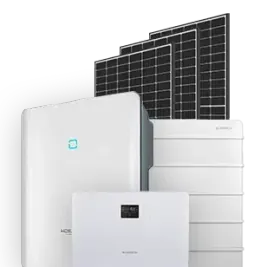
- Solar: 6.6 kW, 16 panels.
- Inverter: 5 kW hybrid inverter that runs the panels and the battery.
- Battery: 12.8 kWh.
- Yearly generation: about 9,319 kWh (PVGIS model, north-facing roof).
- Monitoring and backup: these depend on the exact inverter and battery, so your quote names the monitoring app and which circuits, if any, stay on in a blackout.
It is one of our single phase packages; three phase homes start at 15kW on our packages page.
Why 6.6kW of panels goes on a 5kW inverter
Under the SAA Technical Requirements (version 1.9, February 2026), a system without a battery needs an inverter whose output is at least 75% of the panels’ peak power: for 6,600 W of panels that is 4,950 W (SAA’s own worked example), so a 5kW inverter takes up to about 6.6kW of panels. That is why a “6.6kW system” and a “5kW system” can be the same thing: read the panel kW and the inverter kW separately on any quote, and compare prices for a 6.6kW system with a 5kW inverter like for like.
The extra panels cost little in lost output. In the PVGIS model for Mount Waverley, Melbourne, 6.6 kW of panels on a 5 kW inverter makes about 9,319 kWh a year, 0.5% less than the panels could make uncapped (9,368 kWh) and 31% more than 5 kW of panels. Our package’s 5kW inverter is a hybrid, so the same box runs the panels and the battery.
Export limits on Melbourne’s networks
Each of Melbourne’s five electricity networks limits how much solar a single phase home can send to the grid, and several are changing their limits. Under any limit, a battery stores the solar your home can’t use or export.
How many panels in a 6kW or 6.6kW system?
Divide the system size by the panel’s wattage and round up. The panel ranges on our solar panels page run from 435 to 475 W, so a 6kW system takes 13 to 14 panels and a 6.6kW system 14 to 16. Our 6.6kW package lists 16.
| System | Panels | Panel area | Output a day (year average) |
|---|---|---|---|
| 6 kW | 13 to 14 | About 26 to 29 m² | About 23.3 kWh |
| 6.6 kW (our package) | 14 to 16 | About 28 to 32 m² | About 25.5 kWh |
Each panel is about 2 m², so check the sunny, unshaded roof you have before settling on a size. Panel dimensions and weights are on solar panel sizes, and the sizing guide counts panels for 10kW and bigger systems. Smaller sizes are on the 5kW system page.
How much power a 6.6kW system makes in Melbourne
A 6.6kW solar system in Melbourne makes about twice as much in summer as in winter. The table shows the average a day in each season for a north-facing roof in Mount Waverley.
| Season | Average a day | Season total |
|---|---|---|
| Summer (December to February) | About 34 kWh | About 3,073 kWh |
| Autumn (March to May) | About 22.2 kWh | About 2,041 kWh |
| Winter (June to August) | About 16.5 kWh | About 1,521 kWh |
| Spring (September to November) | About 29.5 kWh | About 2,683 kWh |
| Year | About 25.5 kWh | About 9,319 kWh |
East or west-facing roofs, shade and a flatter or steeper pitch all change these numbers; the design for your roof shows its own estimate.
Is 6.6kW solar enough for your home?
Compare what it makes with what you use. A 6.6kW system averages about 25.5 kWh a day over the year, about 34 in summer and 16.5 in winter. Your daily use is the kWh on your bill divided by the days in the billing period, or day by day in your smart meter data. It is usually enough when your use sits well below that output; electric heating, an electric car or electric hot water each push you towards a bigger system.
The solar sizing calculator turns your bill into a system size; what 6.6kW saves is worked out below.
6.6kW solar system price in Melbourne
Solar is quoted installed, with the STC rebate already taken off; a quote should include the panels, inverter, mounting, cabling, installation, network approval and rebate paperwork.
The Solar Choice Price Index lists no 6.6 kW price, so here are its Melbourne rows either side, not interpolated.
| System | Standard offer | Premium offer | Per kW (standard) | Solar STCs included |
|---|---|---|---|---|
| 6 kW | $5,810 | $6,730 | $968 | 35, about $1,300 |
| 7 kW | $6,490 | $7,570 | $927 | 41, about $1,600 |
The STC count is set by the size, your postcode’s zone and the install year: see the STC rebate. Our 6.6kW package includes a 12.8kWh battery, so its price is a solar and battery price: 6.6kW solar with a battery.
What a 6.6kW system saves in Melbourne, and its payback
Solar you use at home saves your full usage rate; solar you export earns only your retailer’s feed-in tariff. An example from our solar calculator’s model: a Melbourne home using 20 kWh a day, 40% of it while the sun is up, on the Victorian Default Offer flat rate in the United Energy area (27.35c a kWh) with a 3c feed-in tariff.
- Solar made: about 9,319 kWh a year on a north-facing roof, on its 5 kW inverter.
- Used at home: about 2,920 kWh (31% of it), worth about $800.
- Exported: about 6,400 kWh, worth about $190.
- Yearly saving: about $990.
| Network | Area | Flat rate | Yearly saving |
|---|---|---|---|
| CitiPower | City and inner suburbs | 25.96c a kWh | About $950 |
| United Energy | Southern suburbs and Mornington Peninsula | 27.35c a kWh | About $990 |
| Jemena | Northern and north-western suburbs | 27.47c a kWh | About $990 |
| Powercor | Western suburbs and western Victoria | 28.22c a kWh | About $1,020 |
| AusNet Services | Outer northern and eastern suburbs and eastern Victoria | 31.98c a kWh | About $1,130 |
Daytime use matters more than the network: the same home saves about $720 a year if only 25% of its use falls in daylight, and about $1,350 at 60%. Solar Victoria says most homes with solar panels alone use around 25% of what they generate. The 3c feed-in tariff is an example: Victoria has had no minimum since 1 July 2025, and retailers’ feed-in tariffs can’t go below 0c.
Payback at the prices either side of 6.6kW
| System | Market average | Yearly saving | Payback |
|---|---|---|---|
| 6 kW | $5,810 | About $970 | about 6 years |
| 7 kW | $6,490 | About $1,010 | about 6.5 years |
These paybacks lean short: the model counts all daylight use as covered by solar and leaves out panel ageing and price changes.
These are examples, not our package’s figures: your quote works out your saving and payback, with the battery, from your own power bills.
6.6kW solar system with a battery: price and battery size
Our 6.6kW package pairs the panels with a 12.8kWh battery on its 5kW hybrid inverter, and we price the two together.
Our price depends on your roof, your switchboard and the panels you choose, so we give it to you fixed, in writing, after a free inspection, with every federal rebate your home qualifies for already taken off.
Neither Solar Choice index prices 6.6kW of solar with a battery, and its solar and battery prices can’t be added: they cover different months and areas, and battery-only prices assume a hybrid system is already installed. On its own, the Solar Choice Battery Price Index, August 2026, put a 10 kWh battery at $7,784 and a 20 kWh battery at $14,972, installed after the federal battery rebate, battery only, as national averages (market data, not our price). See the battery index.
| Rebate | Installed May–December 2026 | Installed after the next drop |
|---|---|---|
| Solar STCs (6.6 kW) | 39 STCs, about $1,500 | 31 STCs, about $1,200 (from 1 January 2027) |
| Battery STCs (12.8 kWh) | 87 STCs, about $3,300 | 72 STCs, about $2,700 (January–June 2027) |
What size battery for a 6.6kW solar system?
A 12.8kWh battery earns the federal rebate at its full rate, which applies to the first 14 kWh, and it suits a system of this size: on an average summer day (about 34 kWh of solar) there is usually spare solar to fill it, while on a winter day (about 16.5 kWh) your daytime use comes first and the battery may not fill.
A bigger battery only pays if you have the solar to charge it and use the power after dark, so more storage usually starts with more panels. The battery size calculator checks a battery size against your solar and evening use.
Work out your rebate
Zone 4 (1.185), which covers most of Melbourne.
Example: 6.6 kW of solar and a 12.8 kWh battery in most of Melbourne
- Solar panel STCs 39 certificates at $38
- $1,480
- Battery STCs 87 certificates at $38
- $3,310
- Solar Victoria panel rebate Tick the box if you may qualify
- $0
- Estimated federal rebatesDepending on the STC price your installer credits
- $4,160–$4,790
Installed from 1 January 2027, the same system gets $870 less.
Batteries smaller than 5 kWh can’t claim the battery rebate.
Get a quote with every rebate appliedHow it works: solar STCs = system kW × your postcode’s zone rating × 5 years (installs in 2026), rounded down. Battery STCs = usable kWh × the battery factor (6.8 per kWh for installs in May–December 2026), at 100% for the first 14 kWh, 60% from 14 to 28 kWh and 15% from 28 to 50 kWh. Each certificate is valued at $33 to $38, the range the Clean Energy Regulator says agents usually pay; single figures use $38, the top of that range. Estimate only: the final figure is on your quote and depends on the certificate price, the install date and the products.
Smaller or bigger than 6.6kW?
Our packages start at 6.6kW, and the inspection shows what fits your roof. For a small roof or low use, 5kW and smaller systems compares the sizes below 6.6kW.
When to step up to 10kW or 15kW
| Package | Panels | Inverter | Battery | Solar STCs |
|---|---|---|---|---|
| 6.6 kW | 16 | 5 kW hybrid | 12.8 kWh | 39, about $1,500 |
| 15 kW* | 34 | 10 kW hybrid | 12.8 kWh | 88, about $3,300 |
* Subject to the final design: the 15kW package puts 150% of its inverter’s rating in panels, which the inverter maker’s maximum array size has to allow.
Step up if your daily use is close to what a 6.6kW system makes, if you are adding an electric car or electric heating, or if you want the battery to fill on more winter days. A 15kW system earns a bigger solar rebate and needs about twice the roof space; a 10kW system sits between the two.
6.6kW solar: your questions
How many panels are in a 6.6kW solar system?
With today’s 435 to 475 W panels, a 6.6kW system takes 14 to 16 panels, rounded up to whole panels, and about 28 to 32 m² of sunny roof for the panels alone. Our 6.6kW package lists 16 panels. Bigger panels mean fewer of them for the same kW, so your quote names the panel model and the count. Panels by system size
Is a 6kW solar system the same as a 6.6kW system?
No: a 6kW system has 600 W less panel capacity. On a north-facing Melbourne roof, 6 kW makes about 8,516 kWh a year and 6.6 kW on its 5kW inverter about 9,319 kWh (PVGIS model). Both can run on a 5kW inverter under SAA’s 75% rule. Market data, not our price: the Solar Choice Price Index, October 2026, put 6 kW at $5,810 in Melbourne, solar only, after STCs; it lists no 6.6 kW price. Prices either side of 6.6kW
How much does a 6.6kW solar system with a battery cost?
Neither Solar Choice price index covers 6.6kW of solar with a battery, and adding its solar price to its battery price gives a misleading figure. The federal rebates take up to about $4,800 off our 6.6kW package with its 12.8kWh battery if installed in May–December 2026. We give you a fixed price, in writing, after a free inspection. 6.6kW solar with a battery
How much will a 6.6kW solar system save me?
It depends on how much of the solar you use at home. On our solar calculator’s example Melbourne home (20 kWh a day, 40% of it in daylight, a 3c feed-in tariff), a 6.6kW system saves about $990 a year on the Victorian Default Offer in the United Energy area, and $950 to $1,130 across Melbourne’s five networks. Victoria has had no minimum feed-in tariff since 1 July 2025, so solar you use is worth far more than solar you export. The worked example
Can I put more panels on a 5kW inverter?
Without a battery, the inverter’s output has to be at least 75% of the panels’ peak power under the SAA Technical Requirements (version 1.9, February 2026), so a 5kW inverter takes up to about 6.6kW of panels. With a battery connected, the panels can exceed that ratio, but never the inverter maker’s maximum array size. Your quote names the inverter and its limit.
What a 6.6kW system means for a Melbourne home
Melbourne’s winter is the limit to plan around. On a north-facing roof in Mount Waverley, Melbourne, a 6.6kW system averages about 16.5 kWh a day from June to August, against 34 kWh in summer, so on short days little may be left for the 12.8kWh battery once your daytime use is covered. Your network area changes the saving too: on the Victorian Default Offer, the example home above saves about $950 a year in CitiPower’s area and $1,130 in AusNet Services’. On exports, CitiPower, Powercor and United Energy plan to lower their fixed export limit to 1.5 kW per phase during 2026–31, with flexible exports as the alternative. Our Mount Waverley team checks your bills, your roof and your network’s export rules at a free inspection.
Get a fixed price for a 6.6kW system
Free inspection, no obligation. Every federal rebate your home qualifies for comes off before you see the price.

Talk to us about a 6.6kW system
Locally owned, locally installed. Call, email, or send the form and we’ll come out and inspect the property.
- Phone
- 0485 000 015
- Workshop
- 8/41 Ricketts Road,
Mount Waverley, VIC 3149