
Your saving
Worked out for your home and bills in your quote
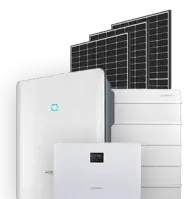
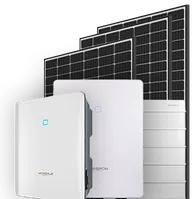
6.6kW Solar + 12.8kWh Battery
- 16x choice of solar panels
- 9,319 kWh generated per year
- 5kW Hybrid Inverter
- All Inclusive

Solar systems
Our solar and battery packages for Melbourne homes come complete and installed: solar panels, an inverter that runs the panels and the battery, and a home battery. Single phase homes choose from 6.6kW to 19.8kW of solar with a 12.8 kWh battery; three phase homes from 15kW to 28kW with 16 kWh or more.
Federal rebates come off the price: up to about $4,800 on the 6.6kW package in most of Melbourne, at $38 per STC. Sizes from 5kW to 20kW are compared below.
Updated
Pick your power supply, then compare its three packages. The table under the cards lists every specification side by side; your saving and payback are worked out from your own bills in your quote.
Your saving
Worked out for your home and bills in your quote
Your saving
Worked out for your home and bills in your quote
Your saving
Worked out for your home and bills in your quote
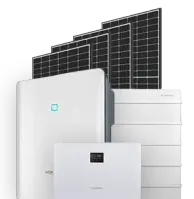
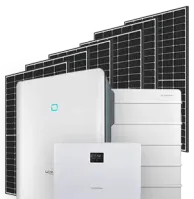
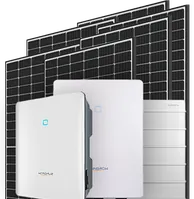
| Single Phase | 6.6 kW + 12.8 kWh | 15 kW + 12.8 kWh | 19.8 kW + 12.8 kWh |
|---|---|---|---|
| Solar | 6.6 kW | 15 kW | 19.8 kW |
| Panels | 16 panels (about 413 W each) | 34 panels (about 441 W each) | 45 panels (about 440 W each) |
| Inverter | 5 kW hybrid inverter | 10 kW hybrid inverter | 10 kW hybrid inverter |
| Battery | 12.8 kWh | 12.8 kWh | 12.8 kWh |
| Yearly generation (modelled) | 9,319 kWh | 20,750 kWh | 24,936 kWh |
Your saving
Worked out for your home and bills in your quote
Your saving
Worked out for your home and bills in your quote
Your saving
Worked out for your home and bills in your quote
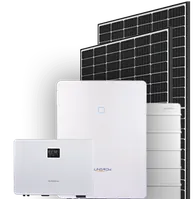
| Three Phase | 15 kW + 16 kWh+ | 21 kW + 16 kWh+ | 28 kW + 16 kWh+ |
|---|---|---|---|
| Solar | 15 kW | 21 kW | 28 kW |
| Panels | 36 panels (about 417 W each) | 51 panels (about 412 W each) | 68 panels (about 412 W each) |
| Inverter | One three phase inverter | One three phase inverter | One three phase inverter |
| Battery | 16 kWh or larger | 16 kWh or larger | 16 kWh or larger |
| Yearly generation (modelled) | 21,291 kWh | 29,807 kWh | 39,742 kWh |
Blackout backup, monitoring and room to add battery capacity later depend on the inverter and battery chosen for your home, so your written quote lists what your design includes.
Installing for a business? See commercial solar.
Your home’s power supply decides which list to choose from. Three phase homes can go bigger because Victoria’s networks pre-approve up to 30 kW of inverter across three phases, against 10 kW on single phase.
Your meter box shows which supply you have: many digital meters are marked 1P or 3P. How to tell single from three phase
Size it by the power your household uses, not by the roof: divide the kWh on your bill by the days it covers, and compare that daily use with a package’s yearly generation (in the spec tables above) divided by 365. A June day makes about 56% of that average, and the roof’s space and direction set the upper limit.
Our single phase packages jump from 6.6kW to 15kW. The table shows what the other sizes people ask about need in Melbourne (panels, roof area and inverter) and what they make in a year.
| System | Panels | Solar a year | Smallest inverter, no battery | Power supply | Market price |
|---|---|---|---|---|---|
| 5 kW The 5kW system | 11 to 12 about 22 to 25 m² | About 7,097 kWh 19 kWh a day | 3.75 kW | Single or three phase | $5,140 premium $5,970 |
| 8 kW | 17 to 19 about 34 to 38 m² | About 11,355 kWh 31 kWh a day | 6 kW | Single or three phase | Not in the index |
| 10 kW The 10kW system | 22 to 23 about 44 to 48 m² | About 14,194 kWh 39 kWh a day | 7.5 kW | Single or three phase | $8,920 premium $10,410 |
| 12 kW | 26 to 28 about 52 to 57 m² | About 17,032 kWh 47 kWh a day | 9 kW | Single or three phase | Not in the index |
| 13.2 kW | 28 to 31 about 56 to 63 m² | About 18,736 kWh 51 kWh a day | 9.9 kW | Single or three phase | Not in the index |
| 19.8 to 20 kW Our single phase package Three phase solar | 42 to 46 about 84 to 95 m² | About 28,104 to 28,387 kWh 77 to 78 kWh a day | 14.85 to 15 kW | Three phase, or single with a battery | Not in the index |
Apart from 19.8kW, none of these is one of our packages; your quote confirms the size that fits your roof.
An 8kW system makes about 11,355 kWh a year and a 12kW system about 17,032 kWh. Both fit single phase without a battery: they need 6 and 9 kW of inverter, under the 10 kW limit.
Without a battery, a 10 kW single phase inverter takes up to about 13.3 kW of panels, so 13.2kW is about the most a single phase home can have without one: about 28 to 31 panels making about 18,736 kWh a year. Going bigger on single phase means connecting a battery, as our 15kW single phase package does. On three phase, a 13kW or 13.2kW solar system fits well inside the 30 kW limit.
The Melbourne figures below are before any inverter limit: PVGIS doesn’t model the inverter, and our hour-by-hour cap runs don’t include 13 or 13.2 kW. On a 10 kW inverter, 13.2 kW of panels is 132% of its rating, so it trims a little on the brightest hours, less than the 2.5% a year 15 kW loses on the same inverter. Installed in 2026, 13.2 kW creates 78 STCs in zone 4 (most of Melbourne) or 91 in zone 3 (some northern and western suburbs): up to about $3,000 or $3,500.
| System | Panels | Solar a year | A June day | Smallest inverter, no battery | STCs, zone 4 / zone 3 |
|---|---|---|---|---|---|
| 13 kW | 28 to 30 about 56 to 61 m² | About 18,452 kWh 51 kWh a day | About 28 kWh | 9.75 kW single or three phase | 77 / 89 |
| 13.2 kW | 28 to 31 about 56 to 63 m² | About 18,736 kWh 51 kWh a day | About 29 kWh | 9.9 kW single or three phase | 78 / 91 |
A 20kW array needs at least 15 kW of inverter without a battery, more than single phase allows, so it suits three phase homes, where our packages come in 21kW and 28kW. Our 19.8kW single phase package uses a 10 kW hybrid inverter with its battery connected, which SAA allows only within the inverter maker’s panel limit. The inverter caps its output at about 24,936 kWh a year, against 28,104 kWh uncapped. Your quote names the inverter and its panel limit.
The price index stops at 10 kW, so there is no market figure for 20kW. In most of Melbourne, STCs take up to about $4,500 off the solar part this year (at $38 per STC), and we give you a fixed price after a free inspection.
For a business roof, see commercial solar.
Every solar panel system we install comes as a complete package:
Your written quote names the panel, inverter and battery models and their warranties.
A hybrid solar system runs the solar panels and a home battery through one hybrid inverter. It turns the panels’ power into power the home can use, charges the battery with the solar the home isn’t using, and runs the home from the battery after dark, then from the grid once the battery is empty. Every package on this page is a hybrid solar power system: the inverter listed under “What’s in every package” runs both its panels and its battery. How hybrid inverters work
Hybrid doesn’t mean off-grid: the home stays connected, and solar the home can’t use and the battery can’t store is exported, up to your network’s export limit. In Melbourne a June day makes only about 56% of the year’s average day, so the battery fills less often in winter than from spring to autumn.
Swapping the old inverter for a hybrid one that takes the panels and a battery (DC coupling) makes an existing system a hybrid one. The other way keeps the inverter you have and puts the battery on its own inverter beside it (AC coupling): panels and a battery again, but on two inverters instead of one. Which suits depends on the inverter you have. AC vs DC coupled batteries
Whether the battery pays depends on your evening use, your feed-in rate and the rebate.
A solar and battery package price depends on your roof, your switchboard and the panels you choose, so we give you a fixed price in writing after a free inspection, with every rebate below already taken off.
The federal rebates come off every package: STCs on the solar panels and the Cheaper Home Batteries discount on the battery.
| Package | Solar STCs | Battery STCs | Federal rebates, about |
|---|---|---|---|
| 6.6kW solar + 12.8kWh battery Single phase | 39 | 87 | $4,800 |
| 15kW solar + 12.8kWh battery Single phase | 88 | 87 | $6,700 |
| 19.8kW solar + 12.8kWh battery Single phase | 117 | 87 | $7,800 |
| 15kW solar + 16kWh+ battery Three phase | 88 | 103 | $7,300 |
| 21kW solar + 16kWh+ battery Three phase | 124 | 103 | $8,600 |
| 28kW solar + 16kWh+ battery Three phase | 165 | 103 | $10,200 |
Every package includes a battery, but you can ask for a solar-only quote. A hybrid inverter keeps the option open: the battery can be added later without changing the panels.
A home that already has solar can add a battery in either of the two ways under hybrid solar systems. The federal battery rebate gets smaller on 1 January 2027 and every six months after that until the end of 2030, so the same battery gets less help the longer you wait. Battery installation
If your solar no longer keeps up with your bills, we can add panels to it or replace it. What fits depends on the inverter’s spare capacity and the roof left, which we check on site. Extending or replacing an old system
Solar panels, an inverter that runs the panels and the battery together, and a home battery, sold and installed as one system with one quote. The install, the network connection and the rebate paperwork are part of it, and the federal rebates for the panels and the battery come off the one price. What’s in every package
About 11,355 kWh a year with the panels facing north, or around 31 kWh a day on average; a June day makes about 56% of that average. An 8kW system takes 17 to 19 panels of 435 to 475 W and needs at least 6 kW of inverter without a battery, so it fits a single phase home. Work out your system size
It is close to the most solar a single phase home can connect without a battery. Victoria’s networks pre-approve inverters up to 10 kW on single phase, and SAA’s rules need the inverter to be at least 75% of the panels’ power when no battery is connected: 75% of 13.2 kW is 9.9 kW. Other common system sizes
It depends on the battery, the inverter and whether your home is single or three phase, so we give you a fixed price after a free inspection. The Solar Choice Price Index stops at 10 kW, so there is no market figure for 20 kW. In most of Melbourne, STCs take up to about $4,500 off the solar part of a 20 kW system installed in 2026, and the battery rebate comes off the battery. Three phase solar and batteries
Yes. Ask for a solar-only quote with a hybrid inverter, and the battery can be added later without changing the panels. The federal battery rebate gets smaller on 1 January 2027 and every six months after that until the end of 2030, so a battery added later gets a smaller rebate than the same battery installed now. Battery installation
Two things about your Melbourne home narrow the packages down. The first is your meter box. All five networks (AusNet Services, CitiPower, Jemena, Powercor and United Energy) approve up to 10 kW of inverter as a basic single phase connection, so the single phase packages stop at a 10 kW hybrid inverter, and the 19.8kW package needs its battery connected to carry that many panels. Three phase allows 30 kW, and its list runs from 15kW to 28kW.
The second is your postcode. The rebate table above is for zone 4, which covers most of Melbourne; in a zone 3 postcode, found in some northern and western suburbs, the same panels earn 6 more STCs on the 6.6kW package and 28 more on the 28kW, up to about $1,100 extra. Then book a free inspection: our Mount Waverley team checks the meter box, the roof and your bills, and quotes the package that fits.
Free inspection, no obligation. Every federal rebate your home qualifies for comes off before you see the price.

Locally owned, locally installed. Call, email, or send the form and we’ll come out and inspect the property.