
Inverters
Solar and hybrid inverters in Melbourne
A solar inverter turns the direct current your panels make into the 230-volt power your Melbourne home uses, and a hybrid inverter also charges and runs a battery. Sized well, it costs little: in Mount Waverley, Melbourne, PVGIS models a 6.6 kW array on a 5 kW inverter making about 9,319 kWh a year, with only 0.5% lost to the inverter’s limit.
Our previous website listed Sungrow, Fronius and Alpha ESS inverters; which brands we install today is being confirmed. The right one depends on your supply, your roof and whether a battery is part of the plan, and your quote names the exact model.
Updated
What does a solar inverter do?
Every solar panel inverter does the same core job: it converts the panels’ direct current (DC) into alternating current (AC) at the grid’s voltage and frequency, for your home and the grid. It also:
- Finds the best output. Its MPP trackers keep each string of panels at its most productive voltage.
- Keeps the grid safe. It meets the Australian inverter standard, AS/NZS 4777.2, and disconnects from the grid when the grid goes down.
- Reports what your system is doing in the maker’s app: generation, use and any faults.
- Runs a battery (hybrids), charging it from spare solar and running the home from it after dark.
Types of solar inverter: hybrid, string, battery, all-in-one and micro
Which of the five types suits your home depends on whether a battery is in the plan, the solar you already have and the shade on your roof.
Hybrid inverters
A hybrid solar inverter runs the panels and a battery from one box on the wall. The battery connects on the DC side, through the charge controller built into the hybrid (Solar Victoria), and many hybrids add a backup port for chosen circuits; some carry the whole home: Sungrow’s SH8.0RS and SH10RS have a 63 A bypass for whole-home backup.
A hybrid supports only the batteries its maker lists, so check the list before you buy: Sungrow: Sungrow high-voltage batteries; Fronius: Fronius Reserva, BYD Battery-Box Premium HVS/HVM and LG RESU FLEX; Alpha ESS: Alpha ESS SMILE-G3 9.3 kWh modules, 1 to 4 in series. For the battery rebate, the Clean Energy Regulator says “The inverter the battery is connected to must be capable of participating in a VPP”; an existing solar inverter on the same site doesn’t have to be.
String inverters
A string inverter converts the panels’ output only, so a battery added later needs its own inverter. It suits solar on its own, or a like-for-like replacement.
Battery inverters (AC coupling)
A battery inverter runs only the battery and connects at the switchboard, beside the solar inverter you already have. Solar Victoria says this AC coupling “can be the easiest method when retrofitting a battery to an existing solar system”.
Battery inverter or hybrid inverter?
All-in-one and modular systems
Some makers sell the battery and its inverter as one system, stacked in modules. From the makers’ Australian datasheets:
- Alpha ESS SMILE-G3-B5: the AC-coupled version of the SMILE-G3, a 5 kW battery inverter with 1 to 4 battery modules, for homes that keep their solar inverter.
- Sigenergy SigenStor Not a brand we list: battery modules sit on a Sigen Energy Controller, a hybrid inverter that also runs the panels; 5.84 or 8.76 kWh modules; 1 to 6 per Energy Controller (up to 52.56 kWh).
- Tesla Powerwall 3 Not a brand we list: built-in solar inverter for up to 20 kW of panels; 13.5 kWh per unit.
Batteries compared side by side
Microinverters and optimised strings
A microinverter sits behind each panel, and an optimiser tracks each panel for a central inverter, so one shaded panel doesn’t pull the others down. They suit heavily shaded roofs or panels facing many ways; microinverters need a battery with its own inverter.
Microinverters vs string inverters
For the hybrids side by side, see the inverter comparison and the battery-ready inverter table.
Is a hybrid inverter worth it without a battery?
It depends on when the battery comes. Solar Victoria’s guide warns that “any ‘hybrid’ inverter you install now could be obsolete by the time you purchase and install the battery”, and offers another route: “Another approach is to initially install a relatively cheap solar inverter, and then replace it with a hybrid inverter later on when you want to add a battery.” Skipping the hybrid costs more later, though: a battery that brings its own inverter is $500 to $1,500 dearer than one added to a hybrid in the Solar Choice Battery Price Index, August 2026 (national market data after the federal rebate, not our price). With no minimum feed-in tariff in Victoria since 1 July 2025, spare solar earns less, and our single phase packages list a battery-ready hybrid.
The inverters we install
The brands below are the ones our previous website listed, and the current list is being confirmed.
Sungrow hybrid inverters (SH series)
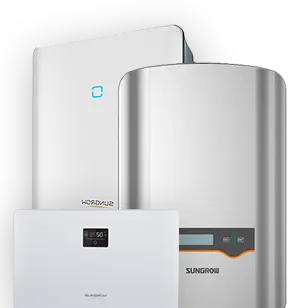
The single phase SH-RS comes in 5, 6, 8 and 10 kW (SH5.0RS to SH10RS), and the three phase SH-T in 5 to 25 kW (SH5T to SH25T). Both run the panels and a Sungrow battery from one box and report to iSolarCloud.
Fronius Primo and GEN24
The Primo is a single phase string inverter (3.0 to 8.2 kW) for solar on its own. For the GEN24 hybrid (Primo GEN24 3 to 10 kW; Symo GEN24 3 to 12 kW), Fronius lists Fronius Reserva, BYD Battery-Box Premium HVS/HVM and LG RESU FLEX, not the batteries in our packages.
Alpha ESS SMILE (inverter and battery in one)
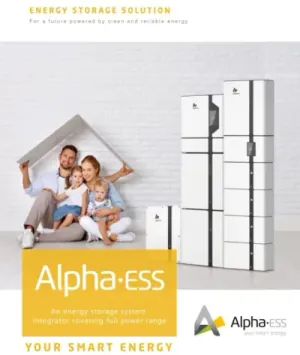
Looking for the Alpha ESS SMILE 5? Its current single phase hybrid in Australia is the SMILE-G3-S5, a 5 kW inverter designed with its own battery: Alpha ESS SMILE-G3 9.3 kWh modules, 1 to 4 in series (up to 37.2 kWh).
Our single phase packages list a 5 kW or 10 kW hybrid inverter; the exact models are being confirmed.
How to choose a good solar inverter
Five checks matter more than the brand name on the box:
- It is on the approved list. The exact model must be on the Clean Energy Council’s approved inverter list, which lists models that meet AS/NZS 4777.2:2020 Amd 2:2024 (in force since 23 August 2025); without it the system can’t earn STCs.
- It is ready for the emergency backstop. New and replacement systems in Victoria have needed a compatible (CSIP-AUS certified) inverter on the CEC approved list and a reliable internet connection since 1 October 2024; without internet, a lower export limit applies.
- A tracker for each roof face. Panels facing different ways belong on separate MPP trackers: Sungrow warns that mixing orientations or tilts in one string “will cause system bad performance”. The models here have 2 to 4.
- Headroom for the panels you want. Without a battery, SAA rules cap the panels at about 133% of the inverter’s output; with one, the maker’s limit applies. Leave room if you might add panels.
- A warranty backed in Australia, with someone here to claim against (below).
Warning signs of a poor inverter or quote
- A brand but no exact model on the quote, or a model missing from the approved list.
- No Australian office or Australian warranty document (each maker’s office).
- Not CSIP-AUS 1.2 compliant: every solar inverter installed in Victoria since 1 November 2026 must be (United Energy), on top of the 1 October 2024 backstop rules.
- Too many panels: over the maker’s limit, or over about 133% of the inverter without a battery.
- A spot in afternoon sun, where it turns itself down on hot days.
Inverter warranties
The maker’s warranty covers the inverter itself: Sungrow, 10 years from installation in Australia (at most 11 years from manufacture); Fronius, 5 years Fronius Warranty Plus as standard; Alpha ESS, 10 years product warranty (Australian datasheet). Fronius extends its cover to 10 years for registering a new inverter on Fronius Solar.web. Solar Victoria suggests 5 years as a minimum. Check the maker handles claims from an Australian office, register the inverter and keep your invoice.
Your quote sets out our workmanship warranty on the installation, alongside the manufacturer’s.
What size inverter do you need?
Two rules set the size. First, without a battery the inverter’s output must be at least 75% of the panels’ peak power under the SAA Technical Requirements (version 1.9, February 2026): a 6.6 kW array needs at least 4.95 kW, which is why our 6.6kW package uses a 5 kW inverter. With a battery connected, the panels can exceed that ratio, but never the inverter maker’s own maximum.
Second, your network sets the largest inverter it pre-approves: 10 kW on a single phase home and 30 kW on three phase across all five Victorian networks, with battery inverters counted in that total. A three phase solar inverter spreads its output across all three phases, so bigger systems fit.
Inverter efficiency and clipping
Efficiency is the share of the panels’ power that comes out as AC: the single phase hybrids here peak at 97.3 to 97.7% on their datasheets (European efficiency, averaged across loads, 96.3 to 97.3%). That 0.4-point gap is about 37 kWh of our 6.6kW package’s 9,319 kWh a year, so sizing and heat matter more.
Clipping happens when the panels could deliver more than the inverter’s rating: it holds output at its limit (Fronius calls this “operating point shift, power limitation”) and the excess is lost unless a hybrid sends it to the battery. At sensible ratios it costs little in Melbourne:
| Panels and inverter | Panels vs inverter | Uncapped output | After clipping | Lost |
|---|---|---|---|---|
| 6.6 kW on a 5 kW inverter | 132% | 9,368 kWh | 9,319 kWh | 0.5% |
| 15 kW on a 10 kW inverter | 150% | 21,291 kWh | 20,750 kWh | 2.5% |
| 19.8 kW on a 10 kW inverter | 198% | 28,104 kWh | 24,936 kWh | 11.3% |
A 6.6 kW array on a 5 kW inverter gives up only 0.5%, because clipping trims only the brightest middays. At 198% the loss reaches 11.3%. SAA rules allow panels above about 133% of the inverter only with a battery connected.
Installing a solar inverter: where it goes
An inverter turns itself down when it gets too hot (Sungrow and Fronius both say so), and the makers here rate theirs for surrounding air up to 60 °C (Sungrow takes that as the average about 1 m around the unit). Placement affects output and lifespan. The makers’ manuals ask for:
- Shade and shelter. Out of direct sun and weather, such as under an overhanging roof. A wall that bakes in afternoon sun is the spot to avoid.
- Air around it. Clear space on every side and unblocked vents; in a cupboard or cabinet only with forced ventilation.
- A solid, non-combustible wall, with the inverter upright, never on a ceiling.
- Away from living areas. Fronius notes it can make a slight noise, so a garage, carport or outside wall suits better.
- Care near the coast. Sungrow asks to be consulted before an outdoor install within 500 m of the coast (salt damage).
- Mild temperatures for a battery. Alpha ESS gives 15 to 30 °C as the optimal range for its SMILE-G3 battery modules, so shade beats sun.
The case gets hot and carries high voltage, so look but don’t touch: the installer picks the spot under the maker’s manual (Sungrow’s SH8.0RS/SH10RS user manual, Fronius’s Primo GEN24 operating instructions), and only a licensed electrician should move one.
When to repair or replace an inverter
Solar Victoria expects a good-quality inverter to last at least 10 years if it is installed properly; heat and poor ventilation, high grid voltage and poor power quality, large electrical spikes, dust, pests such as mice and ants, and lightning shorten that. When yours is out of warranty and keeps faulting, weigh a repair against a hybrid replacement that can take a battery later. A replacement must meet the backstop rules above unless it is a like-for-like replacement on a system approved before 1 October 2024.
Inverter prices depend on the brand, the size and whether it is a hybrid, so we quote a fixed price for your home after checking the system.
Inverter repair and replacement
Monitoring your system
Each brand’s app shows what the panels make, what the home uses and any fault codes:
- Sungrow: iSolarCloud
- Fronius: Solar.web
- Alpha ESS: the AlphaESS app
If it stops updating, check the inverter’s Wi-Fi connection first; our monitoring page has each brand’s reconnect steps.
Solar inverters: your questions
What does an inverter do?
Solar panels make direct current (DC). The inverter turns it into the 230-volt alternating current (AC) your home and the grid use, tracking the panels’ best operating point through the day. If the grid goes down it disconnects; a hybrid with backup can keep backed-up circuits running from its battery, which it also charges and discharges. How solar panels work
What is a hybrid solar inverter?
A hybrid inverter runs solar panels and a battery from one box: it sends daytime solar to the home, the battery and the grid, then runs the home from the battery after dark. Buying one now means a compatible battery can be added later without a second inverter. Solar batteries
Is inverter clipping a problem?
Not with a 6.6 kW array on a 5 kW inverter: PVGIS’s hourly model for Mount Waverley, Melbourne shows that pairing losing 0.5% a year, since only the brightest middays go over the rating. At 19.8 kW on 10 kW it is 11.3%. Panels above about 133% of the rating need a battery under SAA rules, and it can soak up some of the excess.
Which batteries work with each inverter brand?
Sungrow hybrids pair with Sungrow high-voltage batteries, the Alpha ESS SMILE-G3 with its own battery modules, and Fronius GEN24 Plus hybrids with Fronius Reserva, BYD Battery-Box Premium HVS/HVM and LG RESU FLEX. A string inverter has no battery connection, so a battery added to it brings its own inverter (AC coupling). Adding a battery to existing solar
Do I need a hybrid inverter to get the battery rebate?
No. A battery with its own inverter (AC coupled) can qualify for the Cheaper Home Batteries Program too. The Clean Energy Regulator says “The inverter the battery is connected to must be capable of participating in a VPP”, and “Other inverters on site, such as existing solar PV inverters, are not required to be VPP-capable.” So an older string inverter can stay; the battery’s own inverter, or a new hybrid, is the one that must qualify. How the battery rebate works
What is the difference between a hybrid inverter and an all-in-one battery?
A hybrid inverter is one box that runs the panels and a separate battery, chosen from the batteries its maker lists. An all-in-one system sells the battery and its inverter as one product: some, like the Alpha ESS SMILE-G3-B5, sit beside existing solar on the AC side; others, like Tesla’s Powerwall 3 or Sigenergy’s SigenStor, also run new panels. All-in-one and modular systems
What should I look for in a solar inverter?
A model on the approved list that is ready for Victoria’s emergency backstop, the right phase and size for your network’s limits, a hybrid if a battery is likely, a tracker for each roof face, panel headroom and a warranty backed in Australia. We quote the brand that fits your home and say why. Solar inverter brands compared
Where should a solar inverter be installed?
Somewhere shaded, sheltered and well ventilated, on a solid wall that won’t burn. Sungrow and Fronius inverters cut their output when they get too hot, so a garage wall, a carport or the shady side of the house beats a wall in afternoon sun.
Choosing an inverter for a Melbourne home
For a Melbourne home, your network and Victoria’s grid rules settle the inverter before the brand does. AusNet Services, CitiPower, Jemena, Powercor and United Energy each pre-approve up to 10 kW of inverter on a single phase home and 30 kW on three phase. Every solar inverter installed in Victoria since 1 November 2026 must meet CSIP-AUS 1.2, on top of the internet connection the emergency backstop has needed since 1 October 2024. As United Energy notes, “existing inverter models may be able to achieve CSIP-AUS 1.2 compliance through a firmware update”, so what counts is the exact model and its firmware, not the name on the box. We look at your supply, roof and switchboard, then quote the model and where it will go.
Get the right inverter quoted
Free inspection, no obligation. Every federal rebate your home qualifies for comes off before you see the price.

Talk to us about an inverter
Locally owned, locally installed. Call, email, or send the form and we’ll come out and inspect the property.
- Phone
- 0485 000 015
- Workshop
- 8/41 Ricketts Road,
Mount Waverley, VIC 3149